
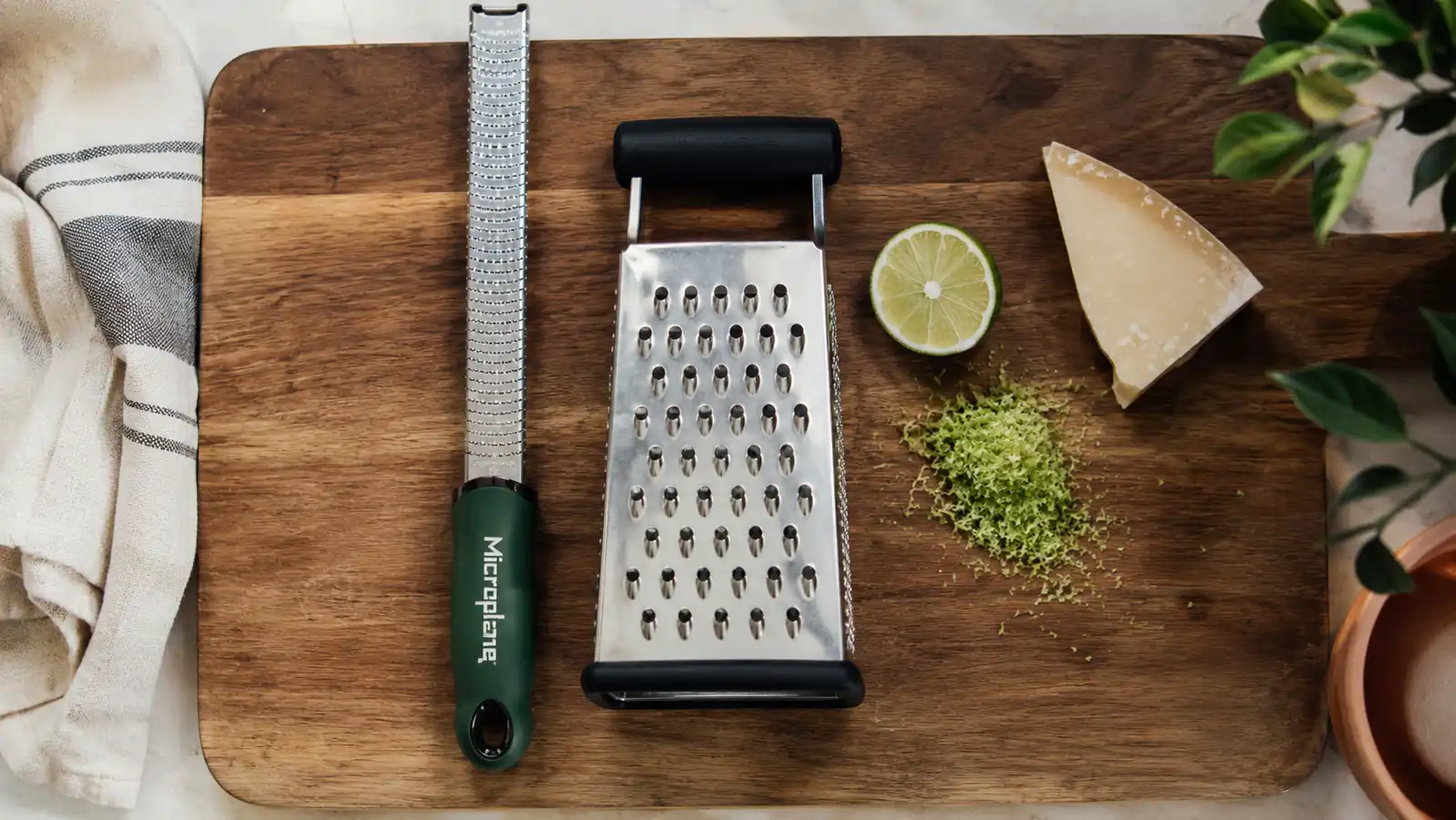
If you've stood in the kitchen aisle debating between a Microplane zester and the box grater already sitting in your drawer, you're asking the right question, because I own both and reach for them for completely different jobs. After about a year of zesting limes for weekend margaritas, grating Parmesan over pasta most weeknights, and running everything from ginger to dark chocolate across both tools, here's the short answer: the Microplane Premium Classic Series Lime Zester and Parmesan Grater is what I reach for when the job needs to be fine and fast, and the box grater that's lived in my drawer since 2021 comes out for block cheddar, hash brown potatoes, and anything that needs real volume.
They're not actually competing for the same job most of the time, which is part of why this comparison gets confusing when you read reviews that pit them against each other like it's a fair fight. It isn't, not really. But if you're trying to decide which one to buy first, which one deserves a spot on the wall hook next to the stove instead of buried in a drawer, or whether you even need both, this is the breakdown from someone who uses both in the same kitchen most nights of the week and has the muscle memory to prove it.
| Microplane Zester | Box Grater | |
|---|---|---|
| Price (today's price) | Around $18 | Typically $12 to $20 |
| Blade Type | Photo-etched stainless steel, razor-sharp teeth | Stamped and punched stainless steel panels |
| Citrus Zest Texture | Fluffy, ultra-fine, no pith caught | Coarser ribbons, pulls pith along with peel |
| Parmesan Texture | Light, snow-like, melts into hot pasta | Thicker shreds, tends to clump |
| Best For | Zest, garlic, ginger, nutmeg, hard cheese, chocolate | Block cheese, carrots, potatoes, cabbage |
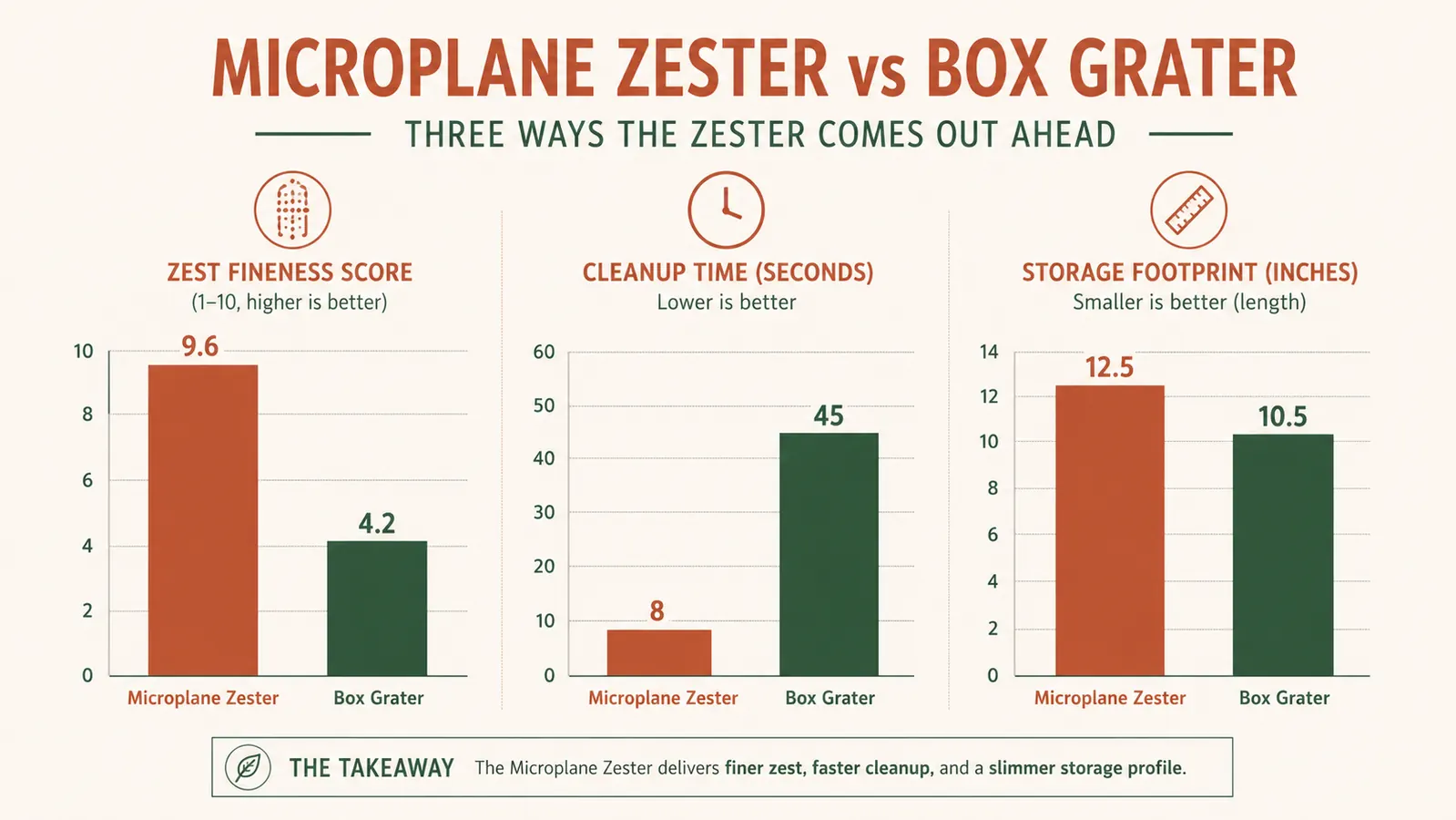
| Storage Footprint | Flat, 12 inches long, less than 1 inch wide, hangs on a hook | Pyramid or box shape, needs drawer or counter space |
| Cleanup | Rinses clean in seconds, dishwasher-safe | Food lodges in the holes, often needs a brush |
| One-Handed Use | Yes, easy grip over a bowl or plate | Usually needs two hands for stability |
| Warranty | Lifetime warranty | Rarely offered, usually none |
Where the Microplane Wins
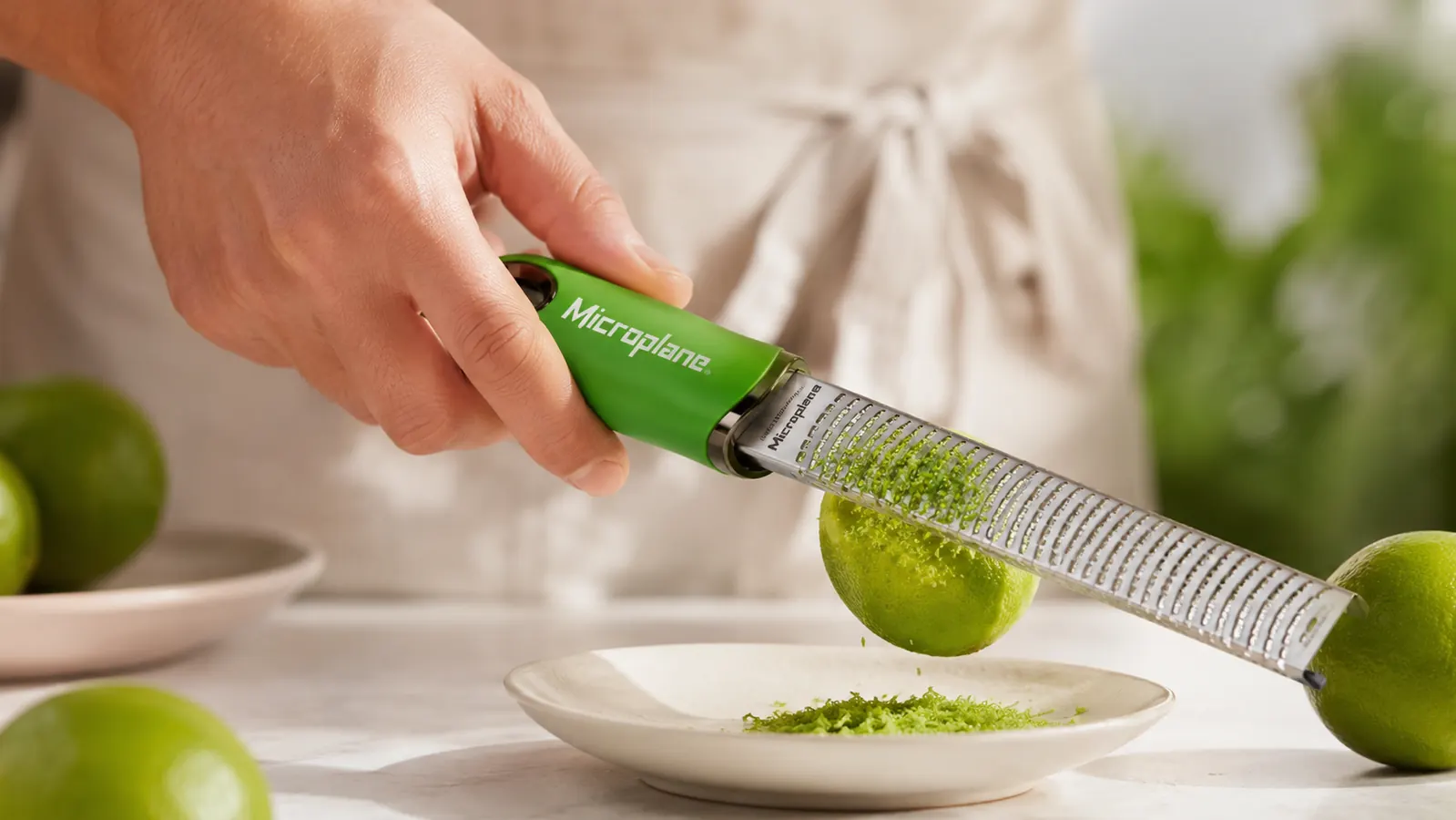
The difference shows up the second you zest a lime with each tool. The Microplane's blade is photo-etched, not stamped, which means the teeth are actually sharp rather than punched-and-bent like the holes on a box grater. Drag a lime across it and you get fluffy, almost weightless curls of pure zest with none of the bitter white pith underneath. Try the same lime on the small holes of a box grater and you'll pull some pith along with it almost every time, because the holes are deeper and less forgiving. I made the same batch of margaritas both ways one Friday night in April just to test it side by side, and the Microplane version had a noticeably brighter, less bitter finish. My husband, who doesn't usually notice these things, picked the Microplane batch as his favorite without knowing which was which.
It's not just citrus. Parmesan grated on the Microplane comes out light and almost snow-like, the kind of texture that melts into a hot bowl of pasta instead of sitting on top in clumps. I use it on garlic cloves when I don't want the harsh bite of a whole minced piece, on fresh ginger for stir-fry, on whole nutmeg for eggnog every December, and on dark chocolate for garnishing desserts. A box grater can technically do most of these jobs, but the results are coarser and less consistent every time. The Microplane also stores flat on a magnetic strip or in a drawer divider, taking up almost no space, which matters a lot in my kitchen where counter real estate is fought over daily.
Where the Box Grater Wins
None of that means the box grater is obsolete in my kitchen. When I'm shredding a full block of cheddar for a taco night with three kids grabbing handfuls, or grating four large potatoes for hash browns, the box grater's large holes move a huge amount of volume fast. Trying to do that job on a Microplane would take three times as long and turn my hand into a claw. The box grater's coarse and medium sides handle carrots for slaw, cabbage for coleslaw, and zucchini for fritters in a way the Microplane simply isn't built for. It's a bulkier tool, but the wide base and stable stance let me press down hard and grate quickly without the tool sliding around on the cutting board.
The box grater also wins on versatility of hole sizes. Mine has four sides, coarse shred, fine shred, slicing, and a small zester panel that, honestly, is nowhere near as fine as a real Microplane, but it's there in a pinch. If I only had one tool and needed to handle both a block of mozzarella and a bag of carrots for a big family dinner, the box grater would get the job done faster, even if the texture on delicate ingredients isn't as refined.
The Cleanup Difference Nobody Mentions
This is the part that actually changed my daily habits more than the zest texture did. The Microplane is a single flat blade with straight-through holes, so cheese, garlic, and citrus zest fall right through and rinse off under running water in under ten seconds. I don't even bother with a brush most nights. The box grater is a different story. Cheese gets wedged into the small and medium holes and has to be picked out or scrubbed with a dedicated brush, and if you let it sit in the sink overnight, dried cheese in those holes is genuinely unpleasant to deal with the next morning.
Over a normal week of cooking, I probably reach for the Microplane four or five times for small jobs, lime zest for a marinade, Parmesan over eggs, garlic into a dressing, and each time cleanup adds maybe fifteen seconds to what I'm already doing at the sink. The box grater comes out once or twice a week for bigger jobs, and cleanup genuinely takes two to three minutes with a brush. Neither tool is a dealbreaker on cleanup, but if you cook on a tight weeknight schedule the way I do most Tuesdays through Thursdays, that difference adds up over a month.
The Nutmeg, Garlic, and Chocolate Test
I ran a small kitchen-table test with both tools on three ingredients a box grater struggles with, whole nutmeg, a clove of garlic, and a bar of dark chocolate. The Microplane handled all three cleanly. Nutmeg turned into fine fragrant dust in a few passes, garlic became an almost paste-like mince with none of the harsh raw bite of a knife-minced clove, and the chocolate shaved into delicate curls perfect for garnishing a plate. The box grater couldn't manage whole nutmeg at all, it's too small and hard to hold safely against the holes. Garlic on the box grater came out chunky and uneven, and the chocolate mostly just crumbled instead of curling.
That test is really the whole story of this comparison. The Microplane is built for precision on small, hard, or delicate ingredients. The box grater is built for volume on larger, softer ingredients like cheese blocks and root vegetables. Neither one is a bad tool. They're just not solving the same problem, and once I stopped expecting one to replace the other, both earned a permanent spot in my kitchen. If you want the deeper story on how the Microplane specifically has held up, I wrote a full five-month review after daily use, and if pith-free zest is your main goal, I also put together a step-by-step guide on how to zest citrus without the bitter pith.

Safety and Grip While You Work
One thing nobody mentions in either direction is how differently these two tools handle risk. The Microplane comes with a plastic blade guard that snaps over the teeth for storage, and the handle is soft-touch rubber that stays put even when my hands are wet from rinsing citrus. I've never nicked a knuckle on mine, though I keep my fingers well clear of the blade edge out of habit, the same way I would with any sharp kitchen tool. The exposed blade when it's not covered is genuinely sharp enough to shave skin if you're careless dragging it too close to your fingertips, so I keep the guard on whenever it's not actively in my hand.
The box grater carries a different kind of risk. The last inch or two of whatever you're grating gets small enough that your fingers end up dangerously close to the punched holes, and I've scraped a knuckle more than once trying to get the last bit of a block of cheese shredded instead of setting the stub aside. Some box graters come with a small hand guard or a food holder accessory, mine didn't, so I've learned to just stop early and eat the last inch of cheese as a cook's snack rather than push my luck. Neither tool is dangerous with normal care, but the Microplane's covered storage and the box grater's stub-end risk are worth knowing about before you're standing at the counter mid-recipe.
Once I stopped expecting one tool to replace the other, both the Microplane and the box grater earned a permanent spot in my kitchen.
Skip the coarse ribbons and bitter pith on your next batch of zest.
The Microplane Premium Classic Series Zester delivers fine, fluffy zest and snow-like Parmesan in a few passes, no pith, no clumps. It's around $18 at today's price on Amazon and comes with a lifetime warranty.
Amazon Check Today's Price on Amazon →Who Should Buy Which
If you cook the way most people actually cook on a weeknight, finishing pasta with fresh Parmesan, zesting a lime for a marinade or cocktail, mincing garlic into a dressing, grating fresh ginger, the Microplane is the tool that will get used constantly and take up almost no space doing it. It's the one I'd tell a new cook to buy first, because it upgrades small everyday moments in a way a box grater can't match. If your kitchen already has a decent knife and you're deciding between these two specifically, the Microplane earns its spot faster, and it's the cheaper of the two most weeks once you factor in how rarely you'll ever need to replace it.
The box grater still matters if you regularly cook in volume, big-batch taco nights, holiday hash browns, homemade coleslaw for a cookout, or shredding a full block of cheese for a casserole. If you already own a box grater and it's serving those bigger jobs fine, adding a Microplane next to it rather than replacing it is the move that actually upgrades your kitchen, because you end up with the right tool for both the small precise jobs and the big volume ones instead of compromising on either one every single time you cook.
Add the tool your box grater can't replace.
For fine zest, hard cheese, garlic, ginger, and chocolate, the Microplane Premium Classic Series Zester does what a box grater simply isn't built for. Check today's price on Amazon and see why it's the tool I reach for almost every night.
Amazon Check Today's Price on Amazon →