
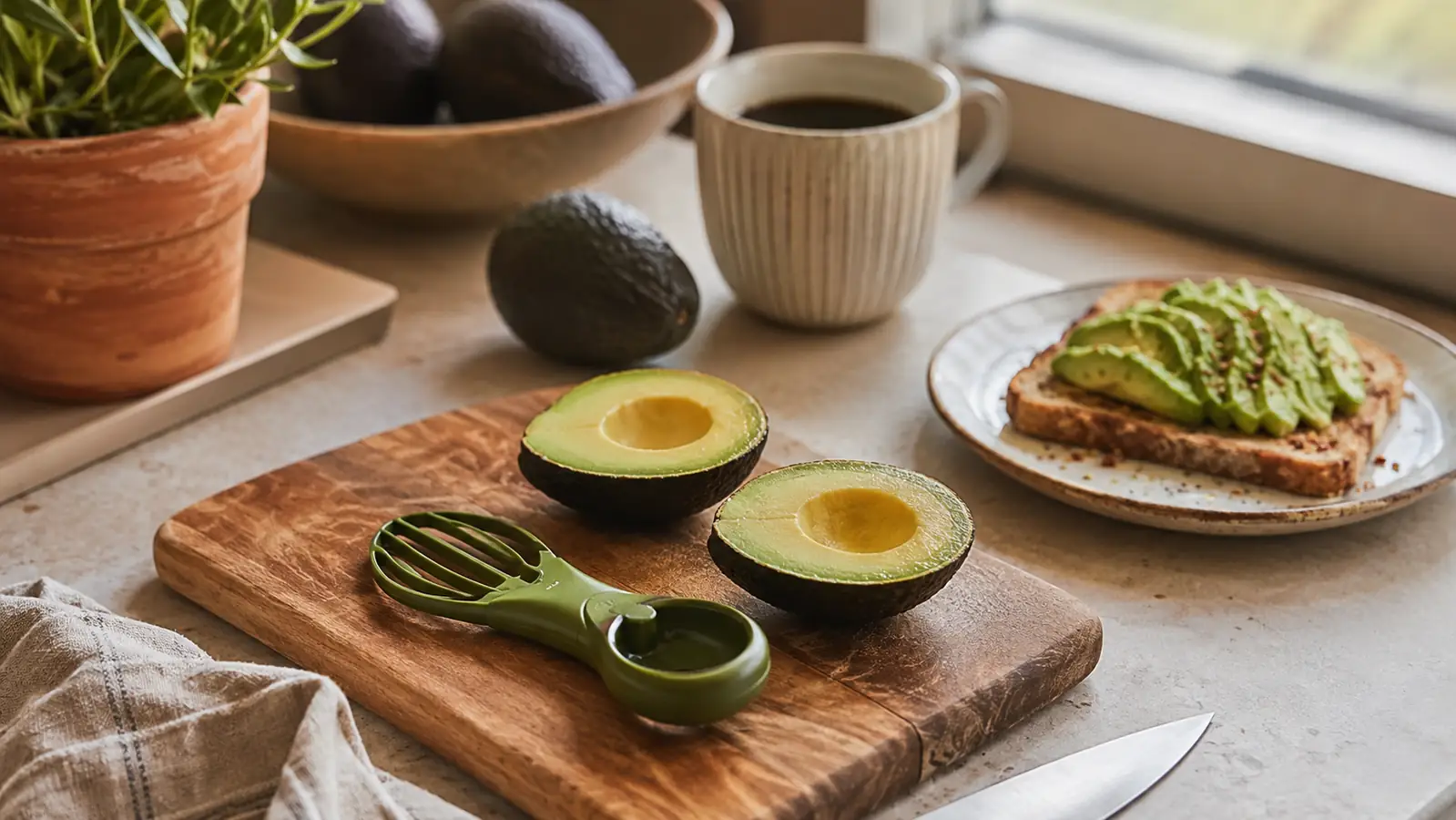
I bought the NADOBA 3-in-1 avocado tool on a whim in early April, tossed into an Amazon cart mostly because it was cheap and my daughter Maya had just discovered she loves avocado toast for breakfast, every single morning, no exceptions. I figured I'd use it a handful of times and it would end up in the drawer with the melon baller and the garlic press I bought in 2019 and forgot existed. That is not what happened. It's July now, and this little green tool has touched somewhere around 90 avocados in my kitchen. Guac for taco Tuesdays, toast five mornings a week, sliced avocado on salads, mashed avocado for Maya's lunchbox sandwiches, and more than a few late-night snack plates when I didn't feel like cooking anything real. It's earned a permanent spot in the utensil crock next to my good knives, which is a strange sentence to write about a $6 plastic gadget.
So here's the long-term verdict, not the unbox-it-and-love-it kind of review, but the one after three months of actual daily use, a couple of drops on the tile floor, one memorable dishwasher mishap I'll get into later, and enough repetition that I now know exactly where it earns its keep and where it doesn't. I'm not a chef, I'm not a food blogger with a test kitchen. I'm a home cook who makes dinner most nights and wanted to know if a $6 gadget was actually worth the drawer space, so that's the lens this whole review is written through.
The Quick Verdict
A genuinely useful daily tool that speeds up avocado prep and keeps my hands away from the blade, but the plastic knife edge has dulled slightly and it's not a real substitute for a chef's knife on firmer avocados.
Amazon Check Today's Price →Still cutting avocados the slow way with a chef's knife and a spoon?
This is the exact 3-in-1 tool I've used almost every day since April. It splits, pits, slices, and scoops in about a third of the time, and it's currently one of the cheapest things in my kitchen drawer.
Amazon Check Today's Price on Amazon →How I've Used It
My routine is pretty boring, which is exactly why this tool got tested so thoroughly. Most weekday mornings I halve an avocado, run the tool's blade edge around the pit to split it, twist the pitter into the seed to pop it out, then drag the fan-shaped slicer through the flesh while it's still in the skin. Ten seconds later I've got even wedges I can lift out with the scoop edge and lay across Maya's toast, usually with a squeeze of lime and a little salt while the toast is still warm enough to melt into. On taco nights I do the same thing but skip straight to the built-in scoop to get everything into the mixing bowl for guac. Weekends, when I'm making a bigger batch for a cookout or when my husband Dave's brother comes over to watch a game, I've used it on six or seven avocados back to back without setting it down.
I also tried it on green tomatoes once out of curiosity for a caprese salad, and on a kiwi, mostly because I was testing where the edges of its usefulness are. It handled both fine, though it's clearly built with avocados in mind, the pitter especially only makes sense for something with a big central seed. I wouldn't buy it for anything other than avocados, but it's nice to know it's not completely useless outside its main job.
What surprised me is how it changed my actual behavior. Before this tool, cutting an avocado meant pulling out a chef's knife, a cutting board, and a spoon, three separate items to wash. Now it's one tool, rinsed under the tap in five seconds, and back in the crock. That's a small thing, but small things are what determine whether a gadget actually gets used or becomes drawer clutter, and this one crossed that line for our house within the first two weeks. By week three I noticed Dave using it without me having to explain how it worked, which for our kitchen is basically the highest compliment a gadget can get.
The Blade, the Pitter, and the Scoop: What's Actually Good Design Here
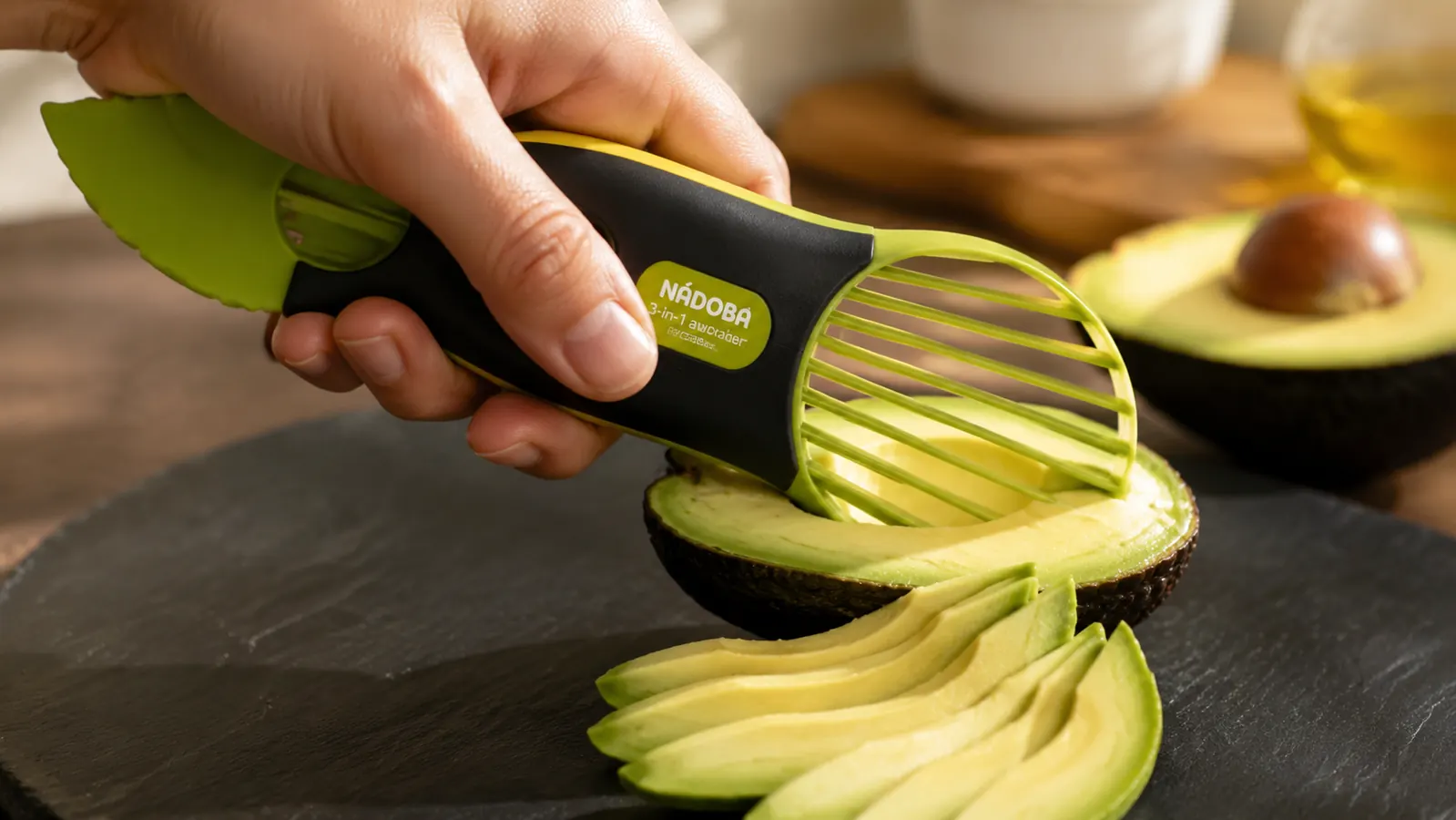
The tool is food-grade plastic, molded in one piece, with three functional edges built into the handle: a serrated blade for splitting the avocado skin, a plastic pitter that you twist into the seed, and a curved scoop edge for getting the flesh out of the peel. The fan-blade slicer is the fourth piece, a separate rounded head with five evenly spaced blades that you drag through the avocado half while it's still sitting in the skin. It's a genuinely clever piece of design when you think about how many separate tools it's replacing on my counter.
The pitter is the part I was most skeptical about before buying, because I've used cheap avocado pitters before that either don't grip the seed at all or grip it so well you end up flinging avocado seed across the kitchen trying to release it. This one has a rubberized-feeling twist grip that catches the pit reliably on the first try maybe 8 times out of 10. The other two times, usually with an avocado that's a little underripe, I have to twist and pull twice. Not a dealbreaker, but not flawless either, and it's the part I most wish NADOBA would improve in a future version.
The fan slicer is honestly the part that sold me. Instead of the old technique of scoring a grid pattern into the flesh with a butter knife, which never comes out even and always leaves a couple of mushed-together wedges, this gives me five consistent slices in one drag. For toast and salads where presentation actually matters a little, that consistency has made my plates look more put-together than they used to, without any extra effort on my part. Maya has started asking for her avocado 'in the fan shape' specifically, which tells you something about how much of a difference it makes even to an eight-year-old.
Three Months In: Does It Still Work Like Day One?
This is the part most reviews skip, because most reviews get written the week the product arrives. Here's what three months of near-daily use actually did to it. The splitting blade, which is the sharpest edge on the tool, has dulled noticeably. In week one it would score through the skin of a ripe avocado with almost no pressure. Now I have to press down harder and sometimes go over the same line twice. It still works, it's just not the same crisp cut it was in April, and I've started wondering how many more months I'll get out of this edge before I notice a real problem.
The fan-blade slicer has held up better than the splitting edge. I think that's because it's doing a different kind of work, dragging through soft flesh rather than scoring through tougher skin, so there's less wear on the plastic teeth. I checked it against a brand-new one my sister bought for her own kitchen last month, and the difference is there if you look closely, comparing the two side by side, but it's not dramatic, and I doubt most people would even notice it in everyday use.
The one real ding against durability happened around week six, when I accidentally ran it through a hot dishwasher cycle instead of hand-washing it like the label suggests. The scoop edge came out very slightly warped, just enough that it doesn't sit perfectly flush against the peel anymore. It still works, it's just not quite as clean a scoop as it used to be. That one's partly on me for not reading the care label closely enough, but it's worth knowing the plastic isn't fully dishwasher-proof despite what a lot of similar tools claim, and I've hand-washed it every time since.
Where It Falls Short
I want to be straight about this because most avocado tool listings make it sound like a miracle gadget, and it isn't one. On underripe or firm avocados, the splitting blade struggles. I learned this the hard way trying to prep avocados for a dinner party that I'd bought two days too early, thinking they'd have more time to soften on the counter. The skin was still tough enough that the blade skated across it instead of cutting cleanly, and I ended up going back to a paring knife for that entire batch while my guests were already arriving.
It's also a single-purpose tool in a kitchen where drawer space is already tight. If you only eat avocado occasionally, a $10 chef's knife you already own does 90% of what this does, and you don't need a dedicated gadget taking up room next to your other rarely-used gear. I only justified keeping it because we go through avocados at a rate that makes the time savings add up week after week.
And the pitter, while good, isn't foolproof. Twice in three months I've had the pit slip loose mid-twist and land on the counter with a little bit of avocado flesh flung with it, once nearly hitting the dog. Nothing dangerous, just a small mess to wipe up and a minor startle. If you're expecting a completely seamless motion every single time, it's closer to 80% seamless, which is good, not perfect.
The Knife Test: Why I Still Reach for This Over a Chef's Knife
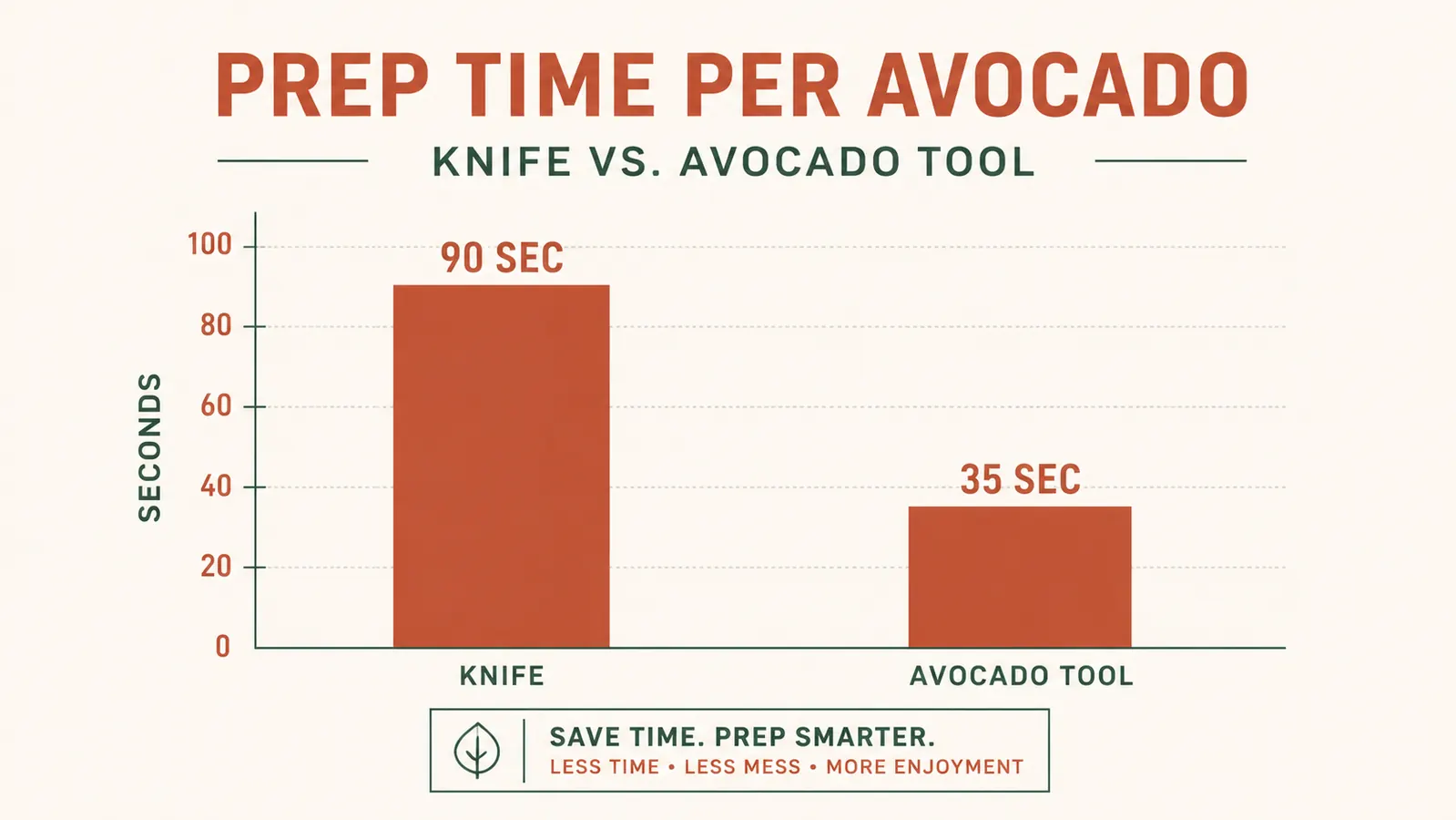
I timed myself one Saturday morning, mostly out of curiosity, halving and slicing six avocados with my usual chef's knife and spoon method, then six more with the NADOBA tool. The knife method averaged just under 90 seconds per avocado once you count rinsing the knife between fruits and wiping down the cutting board from spoon scraping. The tool averaged closer to 35 seconds per avocado, mostly because there's no separate spoon step and rinsing the one tool under the tap takes five seconds. Over a week of daily use, that difference adds up to real time back in my morning.
The bigger difference for me isn't speed, though. It's that I've never once nicked myself using this tool, and I have absolutely nicked myself holding a slippery, halved avocado in one hand while running a chef's knife blade close to my palm to score the flesh, more than once with an actual band-aid required afterward. With Maya often standing right next to me at the counter wanting to help, keeping an actual sharp knife out of that equation matters more to me than the 55 seconds I'm saving, though I'll happily take both.
What I Liked
- Consistent, evenly spaced slices from the fan blade every time
- Cuts total prep time roughly in half compared to a knife and spoon
- Pitter grips the seed reliably on ripe avocados
- Keeps sharp knives away from little hands helping in the kitchen
- Cheap enough that replacing it isn't a big deal if it wears out
Where It Falls Short
- Splitting blade has noticeably dulled after three months of near-daily use
- Struggles on underripe or firm avocados, sometimes skating instead of cutting
- Not fully dishwasher-safe despite feeling like it should be, mine warped slightly
- Single-purpose tool that only earns its drawer space if you eat avocados often
- Pitter occasionally slips mid-twist, flinging the pit and a bit of flesh
It's not a miracle gadget. It's just a genuinely useful one, which honestly might be rarer.

Who This Is For
If you eat avocado toast, guac, or avocado on salads more than once or twice a week, this earns its spot in your drawer within the first month. It's especially worth it if you've got kids helping in the kitchen, since it takes the sharp chef's knife out of the equation for something you'd otherwise be doing with a blade close to your hand. It's also a nice fit for anyone who just wants consistent, presentable slices without practicing a knife technique they're never going to bother perfecting, or anyone who hosts taco nights or cookouts often enough that prepping a big batch of guac quickly actually matters.
Who Should Skip It
If avocados show up in your kitchen once a month, save the drawer space and stick with a knife. And if you tend to buy avocados on the firmer side and eat them within a day or two of purchase, you'll fight the splitting blade more than you'll enjoy the fan slicer, since this tool really shines on ripe, softer fruit rather than the tougher stuff. If that's your household, a good paring knife will honestly serve you better.
Ninety avocados in, this is still the first tool I reach for.
If your mornings involve toast and a half an avocado, or your Tuesdays involve a big bowl of guac, this pays for itself in saved time within the first couple of weeks. Grab it before your next grocery run.
Amazon Check Today's Price on Amazon →