
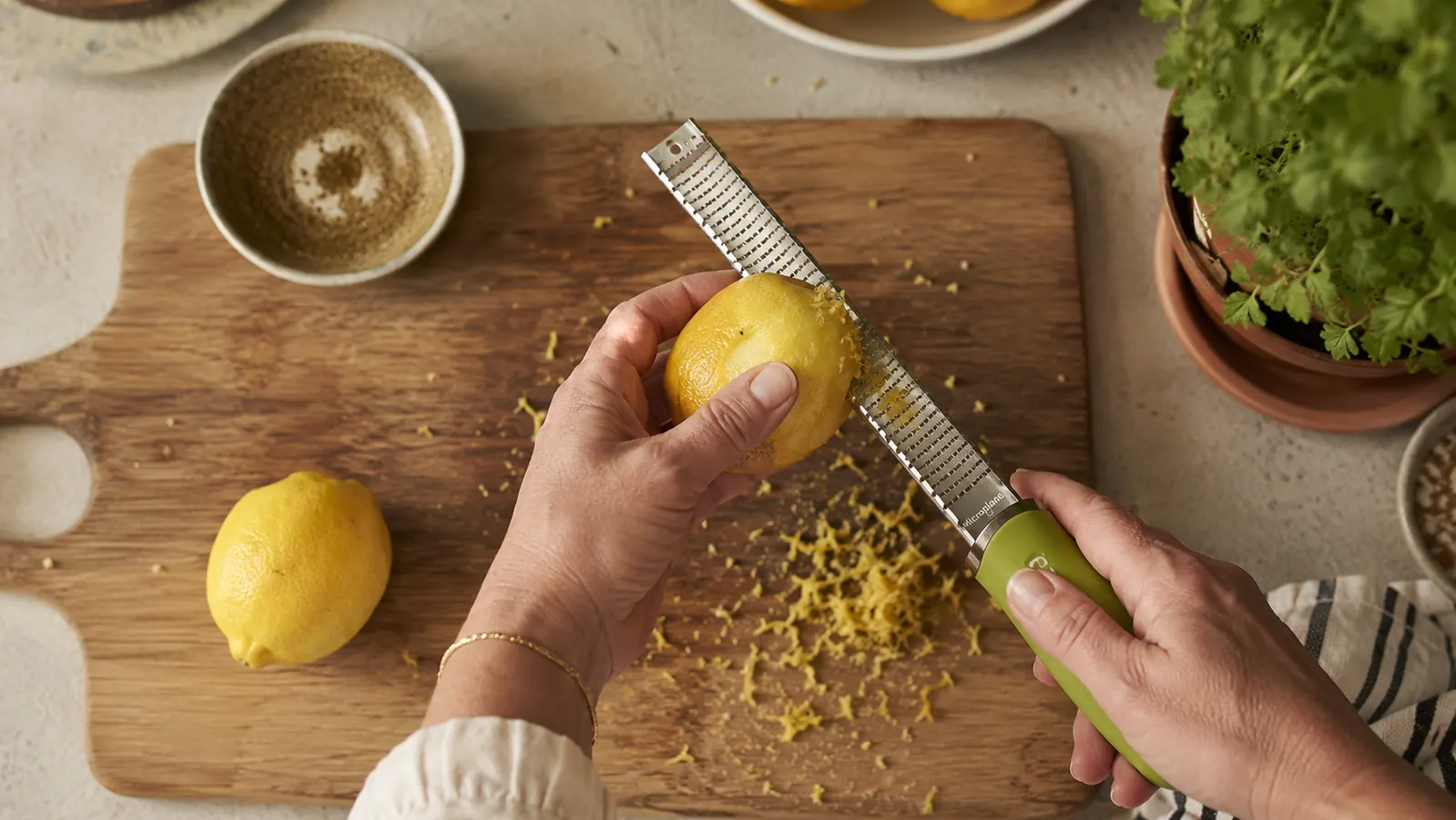
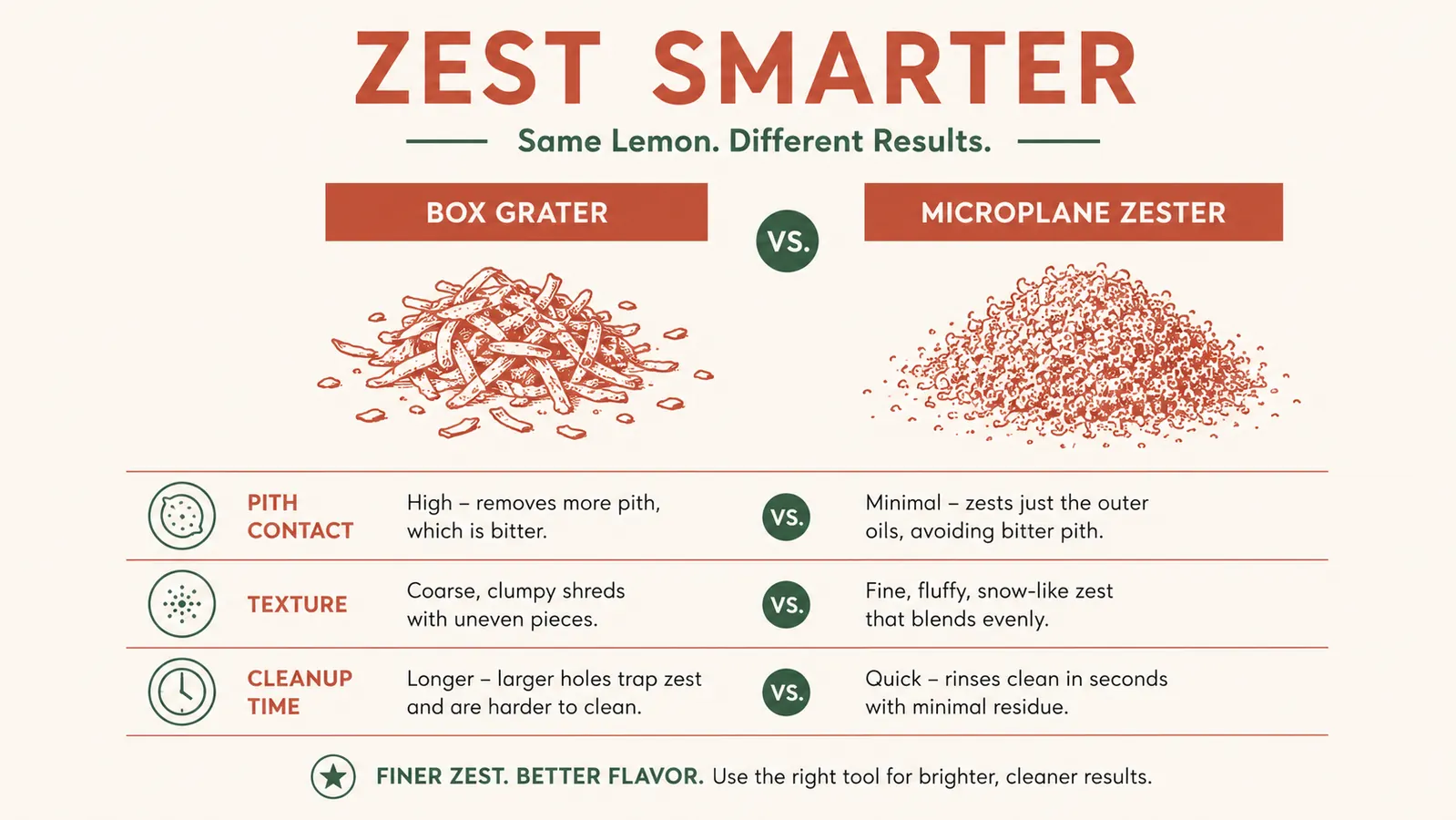
For years I zested lemons on the small holes of a box grater and wondered why my lemon bars always had a faint bitter edge to them. I was catching pith without realizing it, because a box grater doesn't know the difference between yellow skin and white pith, it just shreds whatever you press against it. The same grater turned parmesan into wet clumps instead of the light, fluffy snow you see on restaurant plates. I didn't understand any of this was a tool problem until a friend handed me her Microplane zester to borrow for one dinner and I never gave it back the same night, I just went and bought my own.
The one I use now is the Microplane Premium Classic zester, the same green-handled model that's been sitting in professional kitchens for over two decades. It's been in my utensil crock for close to a year, pulled out most nights I cook. Here are ten reasons it earned that spot instead of getting shoved to the back of the drawer with the melon baller I never touch.
Stop grating pith into your food by accident
An $18 zester is the reason restaurant food tastes brighter than home cooking. It's a smaller upgrade than you'd think for how much it changes.
Amazon Check Today's Price on Amazon →It shaves zest paper-thin, so you never hit the bitter pith
The etched stainless blade on a Microplane sits nearly flush with the surface, which means it only catches the top layer of citrus skin, the colored part loaded with oil, not the white pith underneath. I run it over a lemon in one direction, rotating as I go, and I can watch exactly how deep I'm going the whole time. A box grater doesn't give you that control. It just grabs whatever's in front of it, pith included, and that's the difference between bright zest and bitter zest.
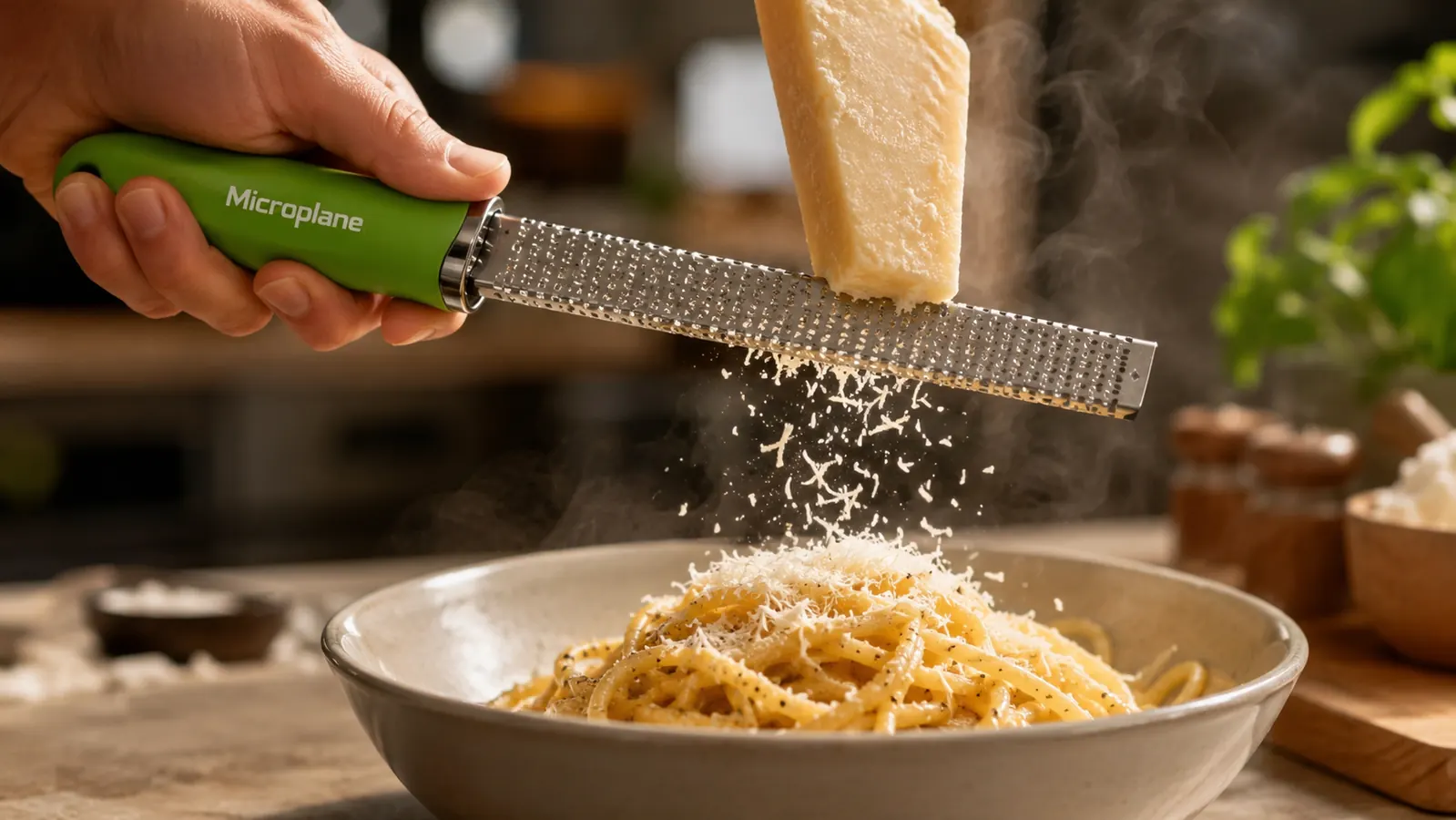
It turns a block of parmesan into snow instead of clumps
I used to grate parmesan on the small holes of a box grater and get these damp, stringy clumps that sat on top of pasta without melting in. The Microplane produces something closer to a fine powder, which falls evenly over a hot dish and actually melts into the sauce instead of sitting on top of it in a pile. I grate it directly over the pot now, tableside, and it disappears into the noodles in about ten seconds.
It grates garlic into a smooth paste, no mincing board required
Mincing garlic with a knife takes me a solid two minutes and I always end up with a few chunky pieces that never cook down. A few strokes of the zester turns a peeled clove into a wet, even paste that dissolves straight into a hot pan or a salad dressing. I use this constantly for vinaigrettes now, because the garlic disperses evenly instead of leaving one bite that's overpoweringly garlicky and the rest bland.
It replaces three separate tools in my kitchen
Before I owned a Microplane, my drawer had a dedicated citrus zester, a garlic press, and a box grater for hard cheese. All three did their one job adequately. The Microplane does all three jobs better than any of them did individually, and it takes up a fraction of the space. When I moved apartments last year, I donated the garlic press and the standalone zester without a second thought.
The blade is still sharp after a year of near-daily use
I was skeptical a thin sheet of stainless could hold an edge, but the photo-etched teeth on this thing haven't dulled noticeably since I bought it. I use it on citrus, hard cheese, garlic, and whole spices several times a week, and it still bites into a lemon on the first pass the same way it did the day I unwrapped it. That's not something I could say about the cheap plastic zester I owned before this one, which dulled within a couple months.
Cleanup takes about ten seconds under the faucet
The flat blade has no crevices for food to hide in the way a box grater's cone shape does. I run it under hot water, sometimes with a quick pass of a sponge if garlic or cheese is stuck in the teeth, and it's clean. It also goes in the top rack of my dishwasher, though I usually rinse it by hand because it's faster than waiting for a full cycle.
It grates whole nutmeg and cinnamon into spice that actually smells like something
I didn't own whole nutmeg until this zester made it worth buying. Pre-ground nutmeg from a jar loses most of its aroma within a few months of the jar being opened, but freshly grated nutmeg off a whole seed smells almost floral by comparison. I keep a couple whole nutmegs and a cinnamon stick in my spice drawer now specifically to grate fresh over oatmeal, coffee, and holiday baking.

It makes citrus vinaigrette and marinades taste noticeably brighter
Adding a teaspoon of fine lemon zest to a vinaigrette does more for the overall brightness than an extra squeeze of juice does, because the zest carries citrus oils that juice alone doesn't have. I started adding zest to marinades for grilled chicken this summer and my husband asked what I'd changed before I even told him. It's a small habit that makes a dish taste more finished without adding another ingredient to the grocery list.
It's light enough to control one-handed over a bowl or pot
The curved plastic handle is comfortable to grip and the whole tool weighs almost nothing, so I can hold a lemon in one hand and zest directly over a mixing bowl or a simmering pot without needing a cutting board in between. That single-handed control matters more than it sounds like it would, especially when you're zesting straight into a hot pan and need your other hand free for the whisk.
It's cheap enough that I stopped settling for box grater shreds
At under twenty dollars, this isn't a splurge purchase, but it changes more dishes than any other tool at that price point in my kitchen. Pasta, salads, baked goods, cocktails, marinades, all of it improved once I stopped reaching for the box grater out of habit. It's the rare cheap gadget that actually earns daily use instead of sitting in a drawer after the first week.
What I'd Skip
I'd skip the off-brand imitation zesters that copy the Microplane shape but use thinner, stamped blades instead of photo-etched stainless. I tried one before switching to the real thing, and it dulled within two months and started tearing citrus skin instead of shaving it cleanly. I'd also skip buying the extra-fine ribbon blade as your only zester if you cook regularly, since it's better suited to garlic and ginger paste than to citrus zest, and you'll end up wanting the classic fine blade anyway. The Premium Classic model handles both jobs well enough that most home cooks don't need a second blade at all.
A dull grater doesn't just slow you down in the kitchen. It changes how the food actually tastes, and most people never realize the tool is the reason.
The eighteen-dollar upgrade that changes every dish
The Microplane Premium Classic zester replaced three tools in my drawer and fixed a bitterness problem I didn't even know I had. It's a small buy with an outsized effect on how food actually tastes.
Amazon Check Today's Price on Amazon →