
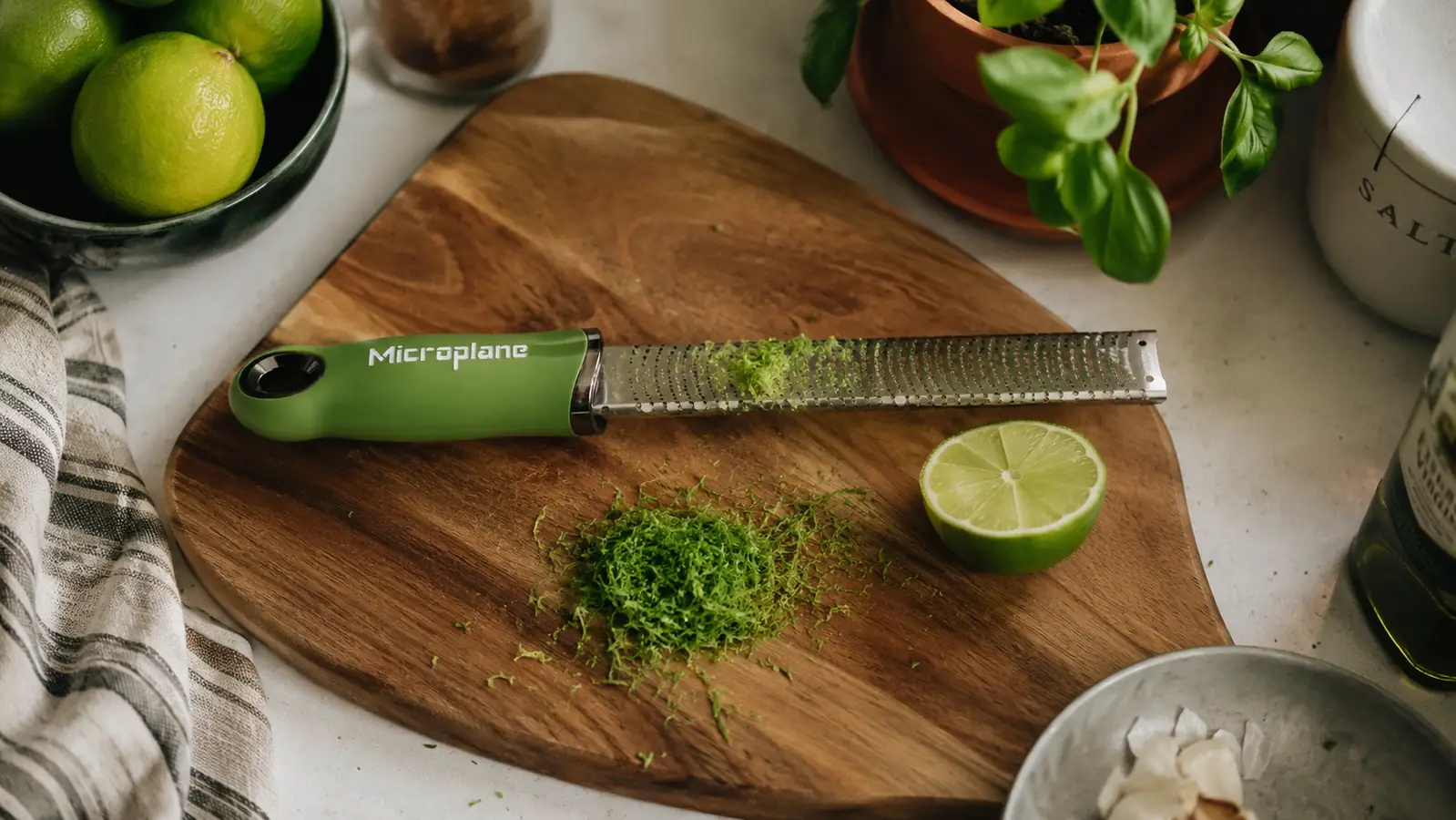
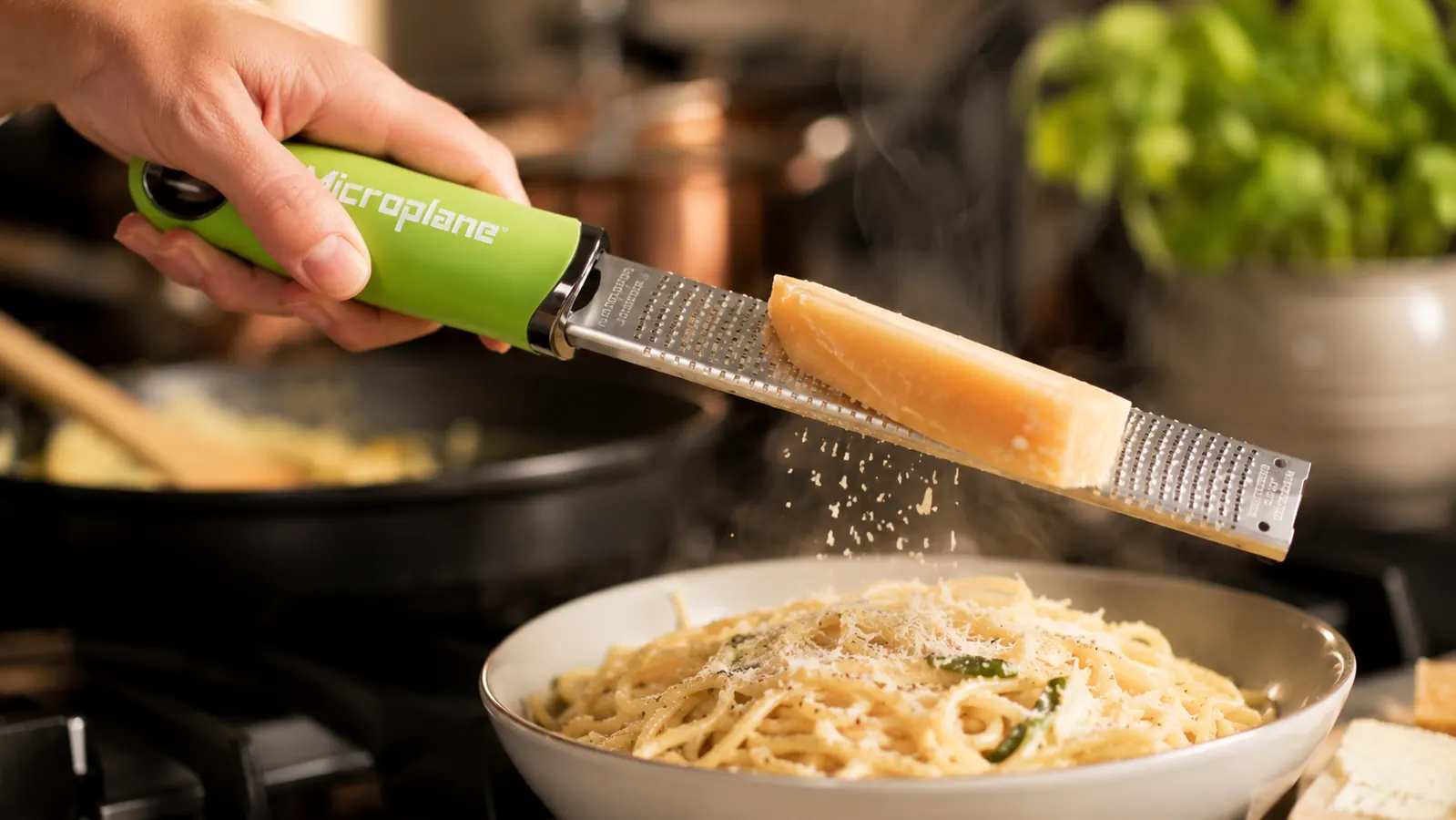
I own the Microplane Premium Classic zester, the green-handled one every food blog tells you to buy, and I want to tell you what those posts skip over. Not the marketing copy, the actual day-to-day truth after using mine for zesting limes on taco Tuesdays, grating a mountain of Parmesan onto weeknight pasta, and shredding fresh ginger into stir-fry for going on fourteen months now. It's a good tool. It's also not the flawless miracle grater the five-star reviews make it sound like, and there are a couple of things I wish someone had told me before I bought it.
Here's the part nobody mentions upfront: the blade really is as sharp as everyone says, sharp enough that I've drawn blood twice reaching into the utensil drawer without looking. But 'stays razor sharp forever' isn't quite true either, and the handle, while comfortable for a quick job, has one specific fatigue problem that only shows up during long grating sessions. This review is the stuff that would've actually changed how I used mine from day one, not another list of reasons to buy it.
The Quick Verdict
Genuinely the sharpest handheld zester I've tested. Worth owning, just not the flawless tool the five-star reviews suggest.
Amazon Check Today's Price →Tired of zest that tastes like bitter pith?
The Microplane Premium Classic takes off just the flavorful outer layer of citrus and hard cheese in one light pass, no white pith, no knuckle scrapes on a box grater.
Amazon Check Today's Price on Amazon →How I've Actually Used Mine
Mine lives in a drawer, not hanging on a hook like the styled photos show, because I don't have wall space near my prep counter and I doubt most people do either. It comes out an average of four or five times a week: lime zest for tacos or margaritas, lemon zest for a pan sauce, Parmesan over pasta at least twice a week, and fresh ginger whenever I'm making a stir-fry or a marinade. That's a heavier rotation than most reviews describe, since a lot of them are written after a week or two of testing, not real months of dinner-after-dinner use.
The first thing that struck me, and still does, is how little pressure it takes. You don't press down and grind like you would on an old box grater. You barely touch the citrus to the blade and drag it once, and a fine cloud of fragrant zest just appears. My kids noticed the difference before I explained anything, they commented that the lime on their taco actually tasted like lime instead of nothing.
I've also used it for things the packaging doesn't advertise as hard: grating a clove of garlic straight into a dressing when I didn't want to dirty a garlic press, shaving dark chocolate over ice cream, and finely grating whole nutmeg for a pumpkin bread recipe that calls for it fresh. It handles all of that well. Where it starts to show its limits is anything fibrous or stringy, like grating a whole carrot for a salad, which tends to clog the blade fast and isn't really what this tool is built for.
If I do the math on cost per use, it works out to almost nothing. At the current price, and with four or five uses a week for over a year, I'm well under a nickel per use at this point, and the blade shows no sign of needing replacement anytime soon. That's the kind of math that never shows up in a review written after two weeks of testing, because you can't actually see it until you've owned the thing for a long stretch and kept reaching for it out of habit, not obligation.
The Sharpness Truth Nobody Mentions
Every review says this thing is sharp, and it is, genuinely sharper than any grater I've owned. What they don't say is that it stays sharp enough to be a real hazard for as long as you own it. I've nicked a knuckle twice reaching past it in a drawer without looking, once badly enough to need a bandage. If you have young kids who dig through drawers, or you're someone who reaches for things without looking, this is worth knowing before you buy, not after.
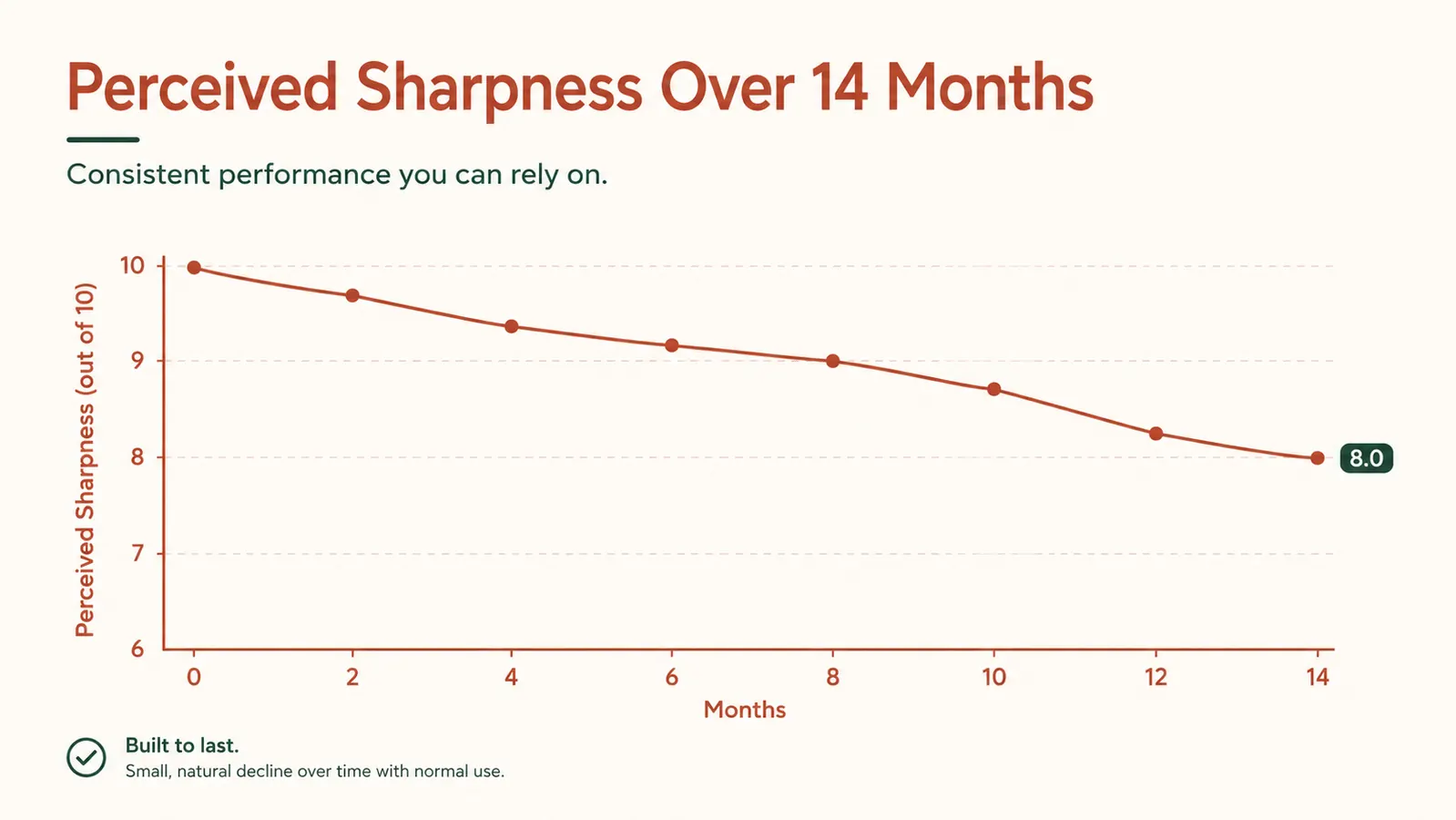
The dulling question is the one I actually wanted answered before I bought mine, and the honest answer is that it does dull, just slowly and unevenly. After fourteen months of the use I described above, it's still noticeably sharper than a cheap grater fresh out of the box, but I can feel it takes a slightly firmer drag on lime peel than it did in month one. It's not dramatic. It's the kind of thing you'd only notice if you were paying attention, which most people won't be.
What speeds up the dulling, in my experience, is the dishwasher. I ran mine through the dishwasher for the first three months out of habit before I read enough owner complaints to stop. Hand washing with a soft brush and mild soap, then drying it right away, seems to have slowed the edge loss noticeably since I switched. I can't prove that scientifically with one zester, but enough other long-term owners report the same pattern that I trust it.
I also learned the hard way that the blade dulls faster on hard cheese than on citrus. Parmesan, especially the well-aged, rock-hard wedges, takes more of a toll on the teeth than a soft lime peel ever will. If your main use case is grating hard cheese several times a week rather than citrus, expect the edge to soften a little sooner than the timeline I've described here. It's still usable, just not quite as effortless by month eight or nine as it was on day one.
The Pith Myth
The marketing promise is that the fine etched blade only takes the colored zest and leaves the bitter white pith untouched, every time, effortlessly. In practice, that's mostly true, but it still depends on technique. If you press hard or drag the same spot repeatedly trying to get 'just a little more' zest off a lime, you will eventually catch pith, and it does turn the zest slightly bitter. The tool makes it easy to avoid pith. It doesn't make it impossible to mess up.
What actually solved this for me was rotating the fruit instead of dragging the blade over the same section twice. One or two light passes per section, then move to a fresh spot, gives you the pure colorful zest the recipes promise. Going back over already-zested skin looking for more is where every bad, bitter batch I've made came from. Nobody mentions that the tool rewards a specific light-handed technique, they just say 'no pith' like it happens automatically.
There's also a real difference between citrus varieties that I didn't expect. Limes and lemons have thin enough skin that even a slightly heavy hand rarely causes trouble. Oranges and grapefruit have a noticeably thicker pith layer underneath, and I've gotten a bitter batch of orange zest twice from being a little too aggressive, something that's never happened to me on a lime. If you're zesting citrus you're less familiar with, go lighter than you think you need to the first time.
Cleaning Reality: What The Reviews Don't Say
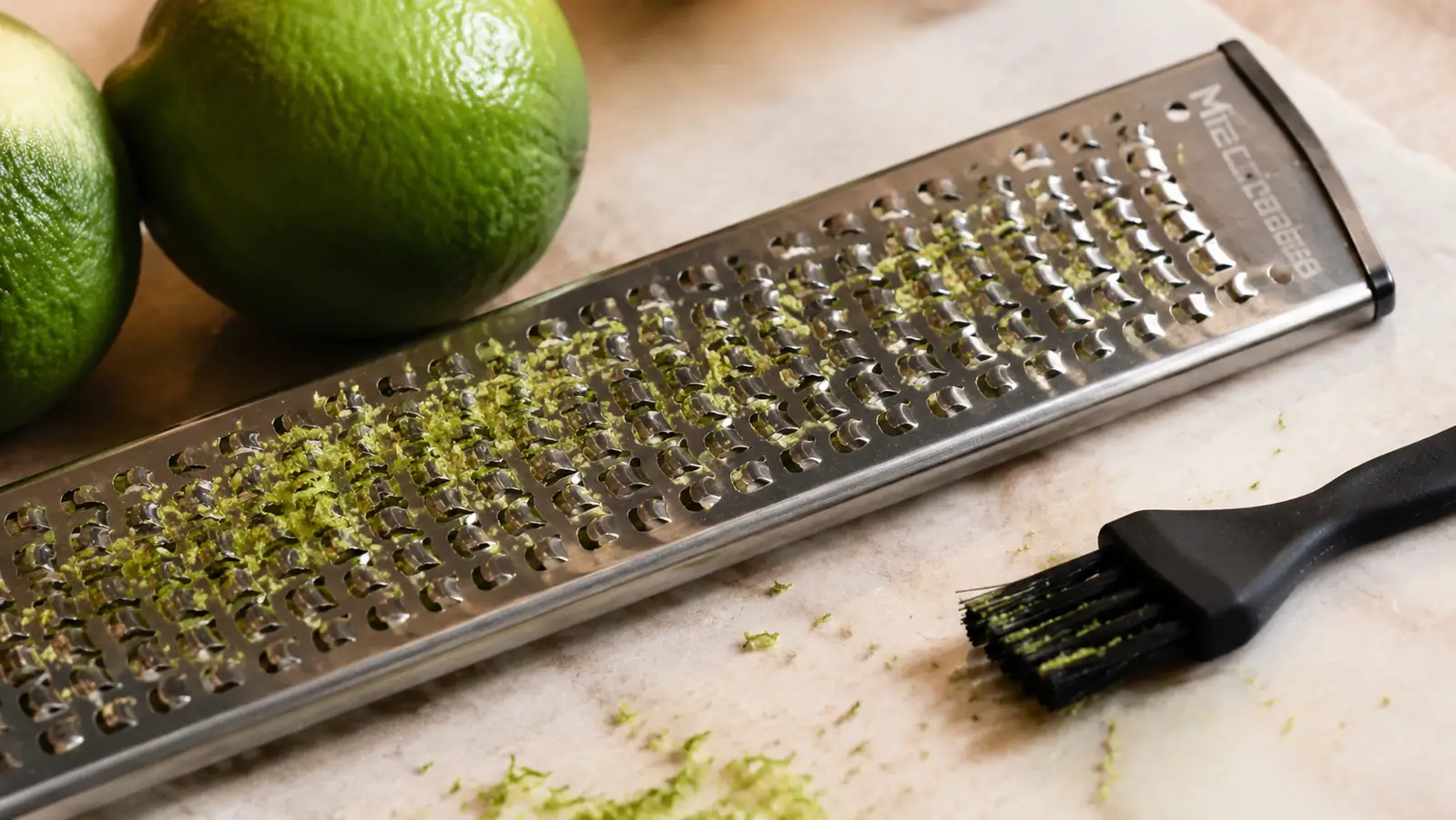
Rinsing it under the faucet takes ten seconds most of the time, and that part of the reputation is earned. What isn't mentioned enough is that fine zest, especially from limes and lemons, gets genuinely stuck in the tiny etched teeth of the blade, and a plain rinse does not always get it all out. I keep a small dish brush specifically for this now, because a toothbrush works but leaves bristles behind and a sponge just pushes the zest around instead of lifting it out.
Parmesan is worse than citrus for this. If I let the zester sit even twenty minutes after grating cheese onto pasta, the little bits dry on and take real scrubbing to remove. My habit now is to rinse it immediately after use, before it goes anywhere near the sink pile with the dinner dishes. That one habit change has saved me a lot of annoyance compared to my first few months of just tossing it in with everything else.
The included plastic guard is another small thing worth knowing about ahead of time. It clips over the blade for storage, and it's genuinely useful for safety, but mine has already popped off and gone missing once, forcing me to fish through a junk drawer to find it before I felt comfortable storing the zester loose again. It's a small plastic piece, and small plastic pieces disappear in real kitchens. Worth having a backup plan, like a dedicated slot in a drawer organizer, rather than counting on the guard alone.
Handle Comfort, the Long-Session Problem
For quick jobs, zesting one lime, grating cheese over a single bowl, the soft-grip handle feels great. It's where I'd expect the complaints to be and they mostly aren't warranted for typical use. The problem shows up on the rare occasions I've used it for a bigger job, like grating a full cup of Parmesan for a big pan of baked ziti for company. After three or four minutes of continuous grating, the narrow grip point starts to dig into the same spot on my palm, and my hand genuinely gets tired in a way it doesn't with a wider-handled box grater.
This isn't a dealbreaker for how most people actually use it, since most zesting and grating jobs are quick. But if you're planning to use it for volume grating regularly, like prepping cheese for a big family recipe every week, it's worth knowing your hand will feel it before you're done. I didn't see this mentioned in any review before I bought mine, and it's the one thing that occasionally makes me reach for a different tool instead.
Cheaper Alternatives I Tried, and Why I Went Back
Before settling on the Microplane, I tried two cheaper off-brand zesters that looked nearly identical in photos. Both were noticeably less sharp out of the box, which sounds like a safety win until you realize it means more pressure and more passes to get the same amount of zest, which increases your odds of catching pith anyway. One of the two also started rusting faintly along the blade edge after about two months, something that hasn't happened on the Microplane in over a year.
The other honest tradeoff is handle quality. The cheaper versions had a thinner, harder plastic grip that felt noticeably less secure with wet hands mid-cooking, which matters more than it sounds like when you're holding a sharp blade over a bowl. I don't think the Microplane is dramatically better in every category, but the blade sharpness and grip security were consistent enough that I went back to it and haven't looked at the cheaper options since.
What I Liked
- Genuinely sharper and finer than every alternative I tried, real difference in flavor released
- Takes barely any pressure, less arm fatigue for quick jobs
- Rinses clean fast for citrus if you do it right away
- No rust or pitting after 14 months of regular use
- Comfortable grip for typical one-lime or one-lemon jobs
- Cost per use is nearly nothing once you own it for a full year
Where It Falls Short
- Stays sharp enough to be a real knuckle hazard indefinitely
- Slowly dulls with dishwasher use, needs hand washing to stay at its best
- Fine teeth trap zest and cheese, needs a dedicated brush, not just a rinse
- Handle gets uncomfortable during extended grating sessions like a full cup of cheese
- Not built for fibrous vegetables, will clog fast on carrots or similar
- Included blade guard is small and easy to misplace
The sharpness is real. The dulling is real too, just slower than a cheap grater. Nobody tells you both things can be true at once.
Who This Is For
If you cook the kind of dinners where fresh citrus zest or a hard cheese finish actually matters, tacos, pasta, baked goods, marinades, this earns a permanent spot in your drawer. It's also the right call if you've been using a box grater for these jobs and are tired of the effort, the bulk, and the skinned knuckles that come with it. The current price is low enough that it pays for itself the first time it saves you from wasting a lime's worth of zest because a dull grater couldn't get it off the peel. If you're the kind of cook who finishes a dish with a little extra flavor on top rather than stopping at 'good enough,' this earns its keep fast.
Who Should Skip It
If your cooking rarely calls for citrus zest or hard cheese, this is a single-purpose tool taking up drawer space you might not have to spare. It's also not the right pick if you're grating large volumes regularly, a food processor's grating disc will save your hand for that job. And if you have small kids who explore kitchen drawers on their own, store it somewhere they can't reach, the blade doesn't get gentler just because the reviews call it 'safe.' If you already own a similar zester that's still sharp and serving you fine, there's no honest reason to replace it just for a brand name.
Fourteen months in, the honest verdict still holds up.
Sharp enough to matter, needs a little care to stay that way. The Microplane Premium Classic is still the one I reach for four or five times a week.
Amazon Check Today's Price on Amazon →