
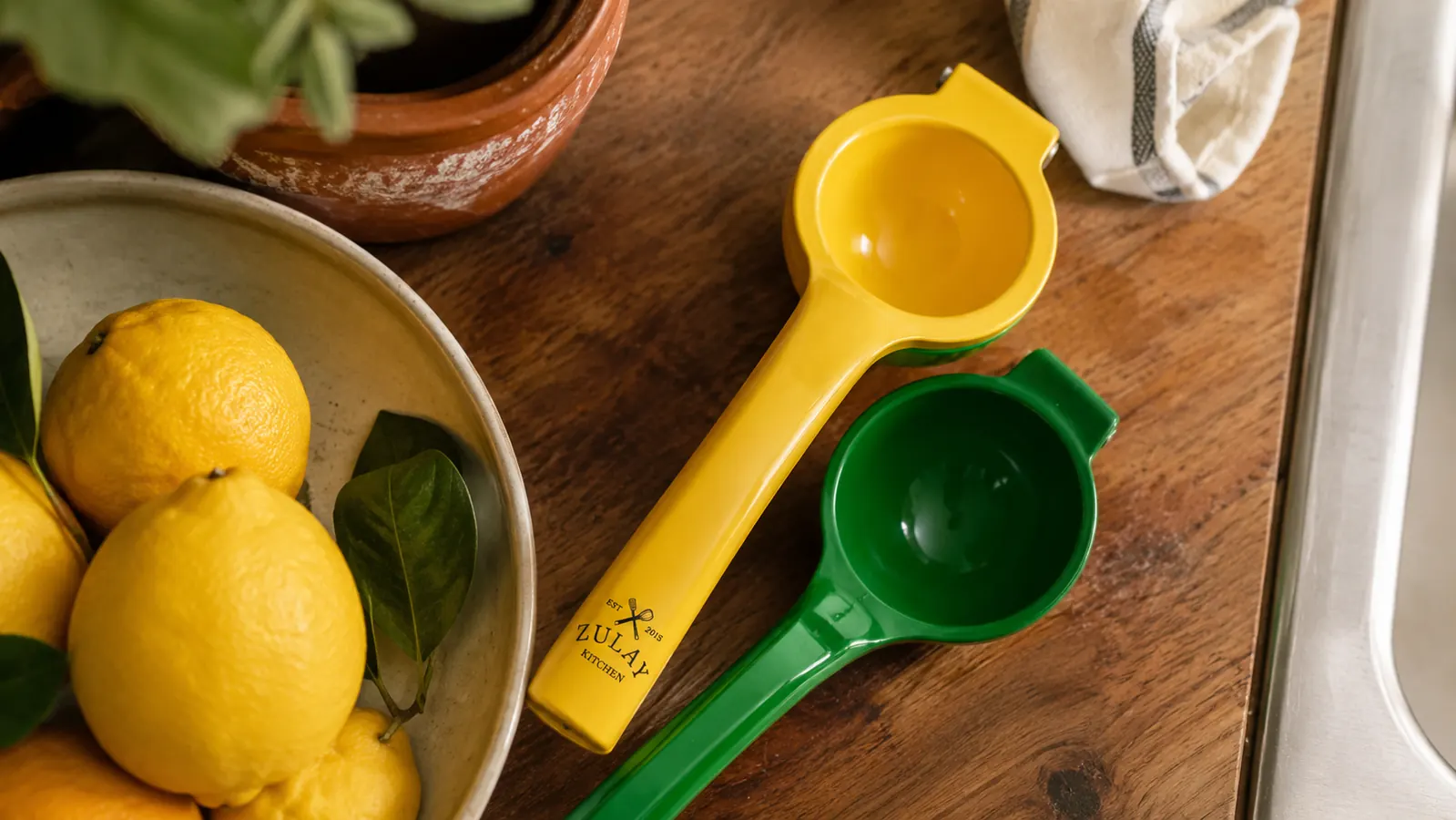
I want to get one thing out of the way before the review starts. I bought this Zulay squeezer because of the exact line on the packaging that made me skeptical, the promise that it gets 'every last drop.' I've bought enough kitchen gadgets over the years to know that phrase usually means 'more juice than your bare hands, but not as much as they're implying.' So instead of just telling you it works great, I measured it against my old method and a cheap wooden reamer, tablespoon by tablespoon, over several weeks of actually cooking dinner.
This isn't a long-term daily-use diary. I've already written that one. This is the review for people who scrolled past forty identical five-star reviews and want to know what the Zulay metal lemon squeezer is actually like to own, including the parts nobody mentions, the coating wear, the handle size, and whether the yield claim holds up under a kitchen scale instead of a marketing photo.
The Quick Verdict
It genuinely outperforms hand squeezing and a basic reamer on yield, and the seed-catching works. The tradeoffs are handle size for smaller hands and a coating that shows wear faster than the product photos suggest.
Amazon Check Today's Price →Before you buy on the yield claim alone, see the actual numbers below.
The Zulay squeezer is one of the best-reviewed manual citrus presses on Amazon, and in my own test it beat both hand squeezing and a wooden reamer for juice extracted per lemon.
Amazon Check Today's Price on Amazon →How I've Used It
My house goes through a lot of lemons in a normal week. My youngest packs fresh-squeezed lemonade in her lunch thermos instead of juice boxes, which is a whole separate story about a school field trip and a very sticky backpack. I make lemon bars most Saturdays for a neighborhood bake sale table my street runs in the summer. My husband makes iced tea by the pitcher and insists it needs 'real lemon, not the bottle stuff.' None of that is glamorous cooking. It's just a household that squeezes citrus constantly, which made it a decent stress test for a tool that claims to be the last one you'll need to buy.
I also use it for the smaller, more precise jobs, a tablespoon of lemon juice in an aioli, a splash into a lemon chicken piccata pan sauce right before I pull it off the heat, a few drops over a bowl of berries. Those are the moments where a squeezer either earns its spot in the drawer or gets left there while I reach for a knife and my hands instead. The Zulay has become the thing I reach for automatically now, which after about four months is a genuinely honest sign that it works, not just that it worked well enough for one glowing unboxing video.
What I haven't done, on purpose, is retread the long-term marinades-and-cocktails ground. If you want that angle, that's a different piece I wrote. This one is about the specific claims on the box and in the reviews, whether they hold up once the tool has been through a real kitchen for a while, and whether the thing that made me pick it up off the shelf actually held up once the novelty wore off and it was just another tool in a busy drawer.
Does It Really Get Every Last Drop? I Measured It
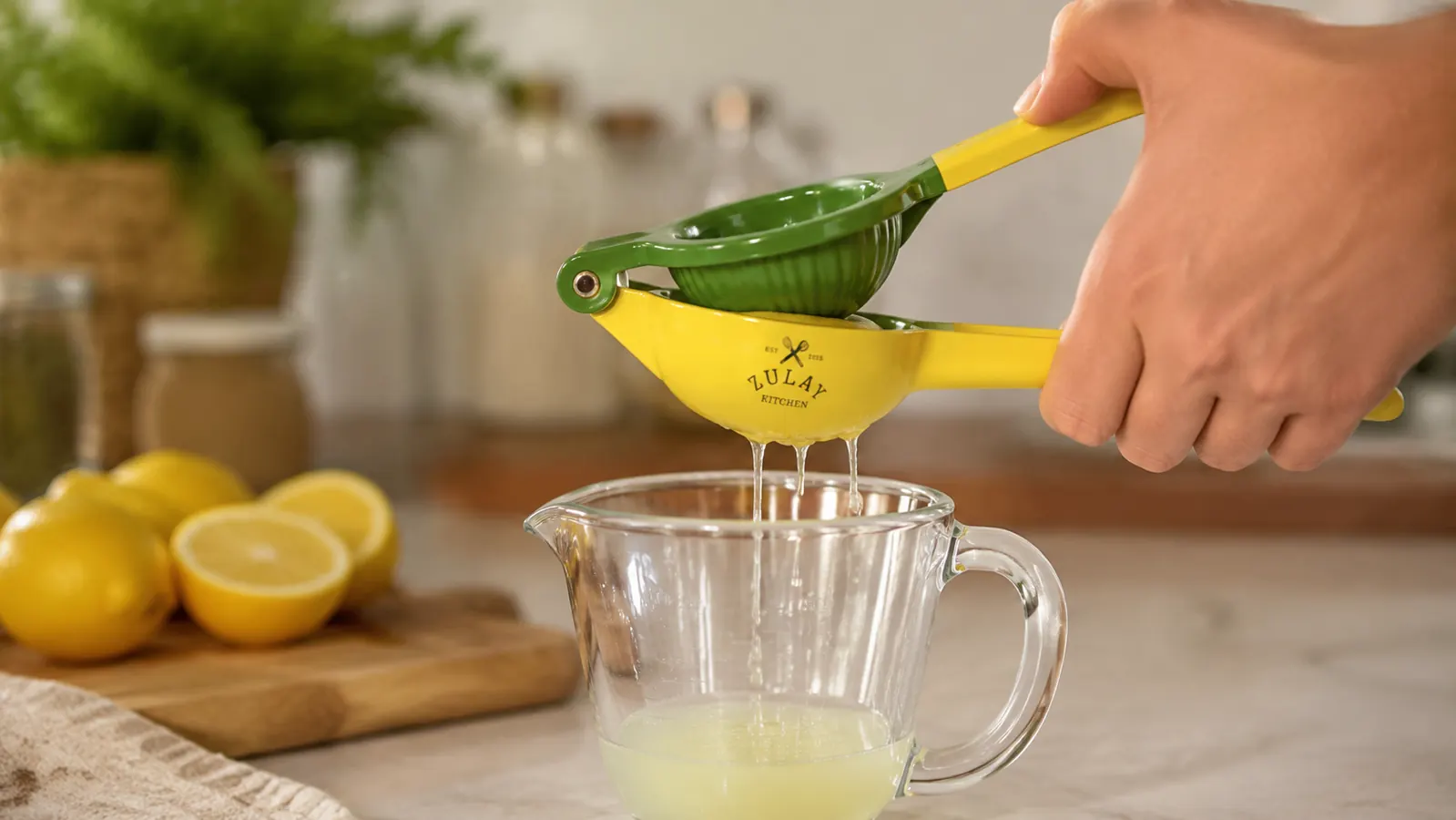
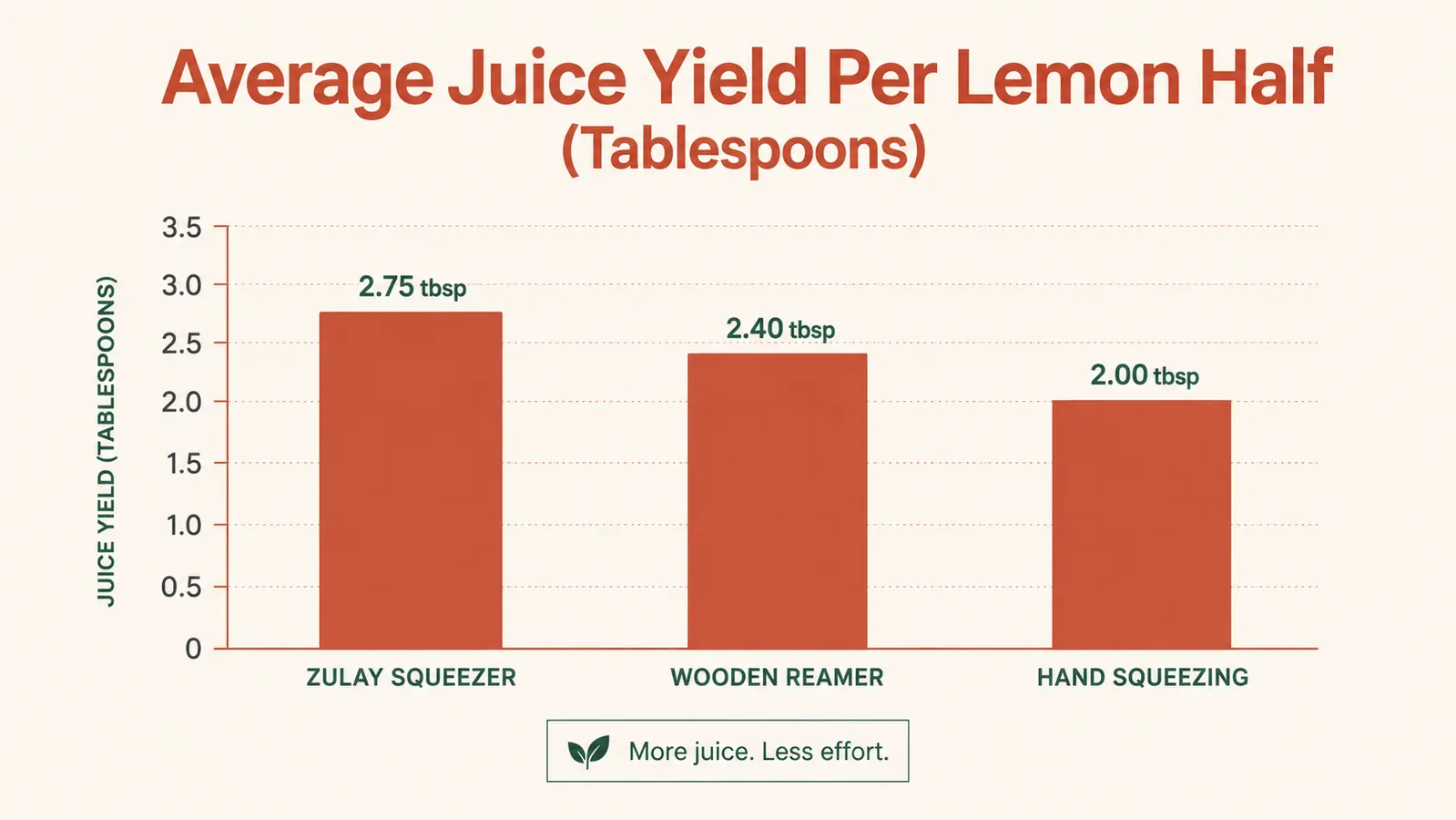
I bought a dozen lemons from the same grocery run, split them into three groups of eight halves, and tested three methods: bare-hand squeezing over a bowl, a $4 wooden reamer twisted by hand, and the Zulay squeezer. Each half went into a small measuring cup so I could read the tablespoon markings directly, no eyeballing. I rotated which lemons went to which method so ripeness and size wouldn't skew any one group.
Hand squeezing averaged just under 2 tablespoons per half. The wooden reamer averaged about 2.4 tablespoons, mostly because twisting breaks up more of the inner membrane than a fist can. The Zulay squeezer averaged 2.75 tablespoons, the clear winner, and it did it with noticeably less arm effort than the reamer, since the hinge does most of the work for you. So the 'every last drop' language is marketing exaggeration, there's always a little juice left clinging to the rind and membrane no matter what you use, but the actual number backs up the core claim that it's the highest-yield manual option of the three.
The bigger surprise for me wasn't the yield, it was the consistency. My hand-squeezed numbers ranged from 1.5 to 2.5 tablespoons depending on how tired my grip was by lemon number six. The Zulay numbers stayed in a tight band the entire time, 2.5 to 3 tablespoons, because the mechanical leverage doesn't get fatigued the way my hand does. If you're juicing four or five lemons for a pitcher of something, that consistency matters more than the peak number on any single lemon.
The Build Quality Nobody Mentions
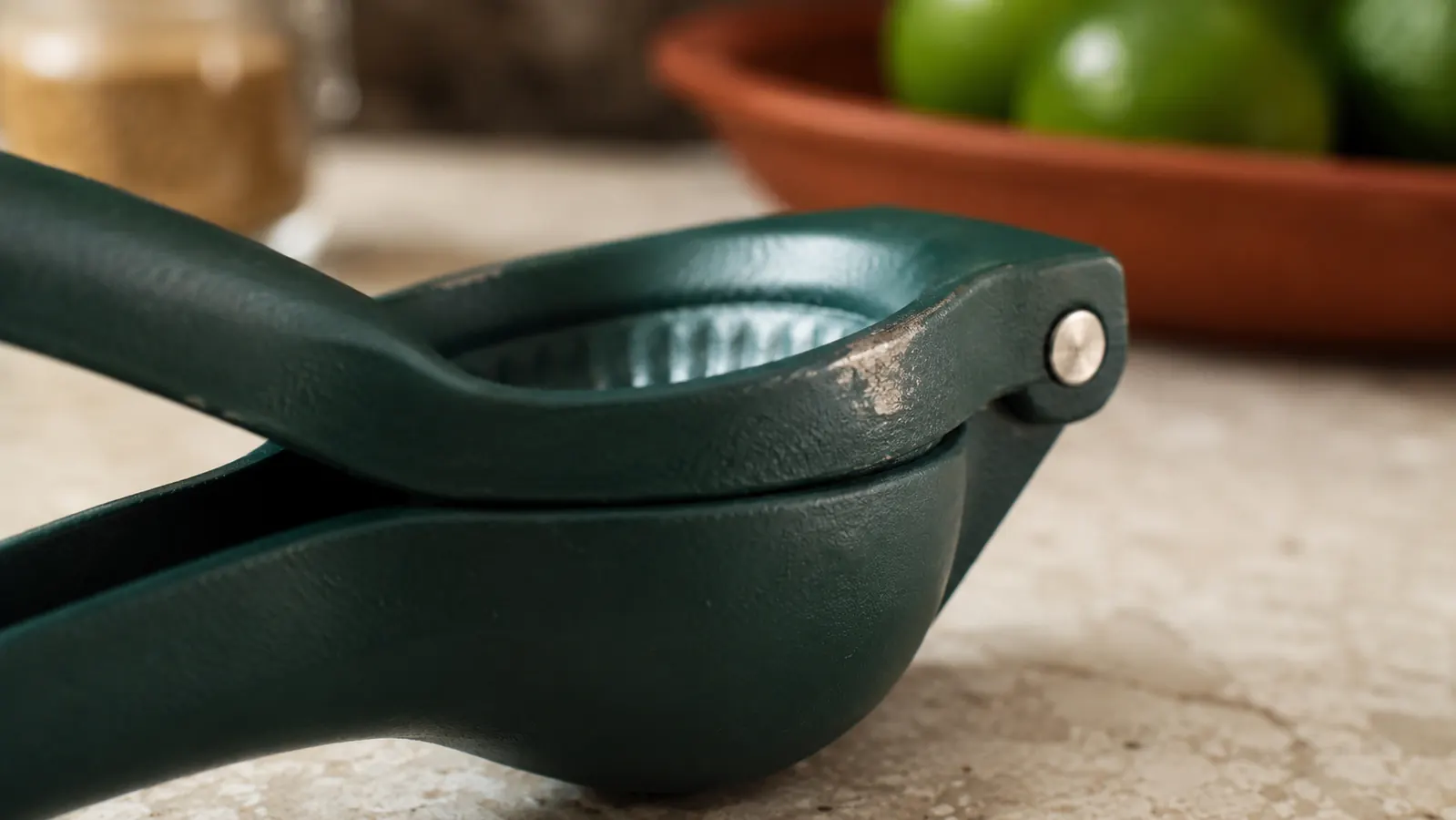
Here's the part that doesn't show up in the review photos. The squeezer is coated metal, not solid stainless, and after roughly four months of near-daily use and regular dishwasher cycles, I'm seeing faint dulling near the hinge where the two halves rub together, and one small spot on the bowl edge where the coating has thinned slightly. It's cosmetic, not structural. The tool still functions exactly like it did on day one. But if you're picturing something that stays showroom-shiny forever, that's not quite realistic for a coated metal tool that lives in a dishwasher.
The hinge itself has held up better than I expected. There's no play or wobble in it, and the spring action still snaps the handles back open the same way it did new. I was more worried about hinge fatigue than coating wear going in, and it's turned out to be the opposite, the mechanism is solid, the finish is the part showing its age.
I also hand-wash it more often now, not because Zulay tells you to, the listing does say it's dishwasher safe, but because I noticed the wear accelerated during a stretch where I ran it through the dishwasher almost every night for a few weeks. Hand-washing takes about ten seconds since there's no fine mesh or narrow gaps to scrub, and it seems to be keeping the coating in better shape going forward.
Handle Comfort and Hand Fatigue
My mother-in-law has arthritis in both hands, and she asked to borrow mine for a weekend when she was making a lemon dessert for a family gathering. Her feedback was useful precisely because she isn't the target demographic Zulay is picturing when it takes those clean product shots. She said the leverage made it easier on her joints than squeezing by hand, but the handle length is a little long for smaller hands, she had to adjust her grip partway down the handle to get comfortable closing force, rather than gripping right at the end.
For me, average-sized hands, the handle length is fine and actually helps, more leverage means less force needed per squeeze. But if you've got smaller hands or reduced grip strength, don't assume every manual citrus press feels the same in your hand. I'd recommend checking the handle length against a squeezer you already own if hand comfort is a real concern for you, since this one runs slightly longer than some competing designs.
Seeds, Pulp, and Cleanup Reality
The seed-catching claim actually holds up well. Across my whole test batch, exactly one seed made it through into the juice, and it was a lemon with an unusually small seed sitting right at the edge of the perforation. Everything else stayed trapped in the bowl. That's a real, noticeable improvement over hand squeezing through your fingers, where I'd usually catch most seeds but not all of them, especially when I'm moving fast on a weeknight.
Pulp control is good but not perfect. A small amount of fine pulp does pass through the holes along with the juice, which is fine for cooking and baking but worth knowing if you specifically want pulp-free juice for something like a clear cocktail or a delicate sauce. If that matters to you, a quick pass through a fine mesh strainer after squeezing solves it in about five seconds, I just wanted to flag that the squeezer alone doesn't fully filter it out the way some listings imply.
Cleanup itself is genuinely one of the strongest points. There's no fine mesh screen to pick pulp out of, which is where a lot of citrus tools go wrong. A quick rinse under hot water gets it clean in seconds, and even when I let it sit in the sink overnight by accident, dried lemon residue wiped off easily with a sponge instead of needing to be scraped or soaked.
Where It Falls Short Compared to Pricier Presses
I also borrowed a friend's higher-end OXO citrus press for a side-by-side week, just to see if spending more actually buys you more. The OXO edged out the Zulay on raw yield by a small margin, roughly a quarter tablespoon per lemon in my rough comparison, and its handle has a slightly more ergonomic curve. But it also costs meaningfully more, and for a quarter tablespoon of extra juice per lemon, I don't think most home cooks would notice the difference in a finished recipe.
Where the gap is more real is limes and small citrus. The Zulay is sized for lemons and larger limes comfortably, but it's a bit oversized for very small limes, they can slip slightly off-center in the bowl. If your kitchen leans heavily on lime juice for cocktails or Southeast Asian cooking, it's worth knowing this tool is optimized for lemons first, limes second.
What the Five-Star Reviews Don't Mention
Reading through a stack of the Amazon reviews before I bought mine, I noticed almost nobody mentions unit-to-unit finish variation. Mine came in a bright, even yellow and green coating, but a neighbor who bought hers a few months after me got one with a slightly duller, more muted green on the handle. Neither of us has had a functional issue because of it, and it's a coating quirk rather than a defect, but if you're expecting the exact saturated color from the listing photo every single time, know that there's some natural variation between batches.
Extra-large lemons are another thing the glowing reviews gloss over. Most lemons close in the bowl without any trouble, but I ran into two oversized lemons from a farmers market haul that didn't sit fully flush, meaning the handles didn't close all the way and I lost a bit of leverage on the squeeze. It's not a common problem with standard grocery-store lemons, but if you're working with home-grown or specialty citrus that runs larger, it's worth knowing this isn't a universal fit.
I also reached out to Zulay's customer support once, not for a defect, just a general question about care instructions, and got a reply within a day with a clear, human answer rather than a canned script. That's a small thing, but it matters if something does eventually go wrong with yours, since a lot of budget kitchen tools come from sellers who disappear the moment a review goes up.
What I Liked
- Highest and most consistent juice yield of the three methods I tested, beating both hand squeezing and a wooden reamer
- Catches nearly every seed without any extra effort
- Cleans up in seconds, no fine mesh to pick pulp out of
- Hinge mechanism still feels solid after months of near-daily use
- Reduces hand fatigue compared to squeezing by hand, noticeable for anyone with grip or joint issues
Where It Falls Short
- Coating shows cosmetic wear near the hinge after regular dishwasher use, hand-washing preserves the finish better
- Handle length runs a bit long for smaller hands or reduced grip strength
- Sized for lemons first, a bit large for very small limes or oversized specialty citrus
- Some fine pulp still passes through, not fully pulp-free juice
- 'Every last drop' is marketing language, there's always a little juice left in the rind no matter what tool you use
It doesn't get every last drop. Nothing does. It gets more than your hands and more than a reamer, consistently, and it does it with less effort. That's the honest version of the claim.
Who This Is For
If you cook with fresh lemon juice more than once a week, marinades, baking, tea, lemonade, sauces, this earns its spot in the drawer fast. It's also a genuinely good pick for anyone with hand or wrist issues where squeezing by hand is uncomfortable, since the leverage does most of the work for you. And if you've been living with a wooden reamer that leaves seeds in your glass, the upgrade in seed-catching alone is worth the switch.
Who Should Skip It
If you only juice a lemon a few times a year, the cost isn't going to justify itself over just using your hands and a fork to catch seeds. If you have smaller hands and grip comfort is a dealbreaker, try to test the handle length in person first, or look at a shorter-handled model. And if pulp-free juice matters to you specifically, for clear cocktails or delicate desserts, you'll still want a strainer on hand regardless of which squeezer you buy.
More juice, fewer seeds, and a hinge that's still solid after months of daily use.
The Zulay squeezer isn't magic, but the numbers back up the core claim better than most kitchen gadgets I've put to an actual test.
Amazon Check Today's Price on Amazon →