
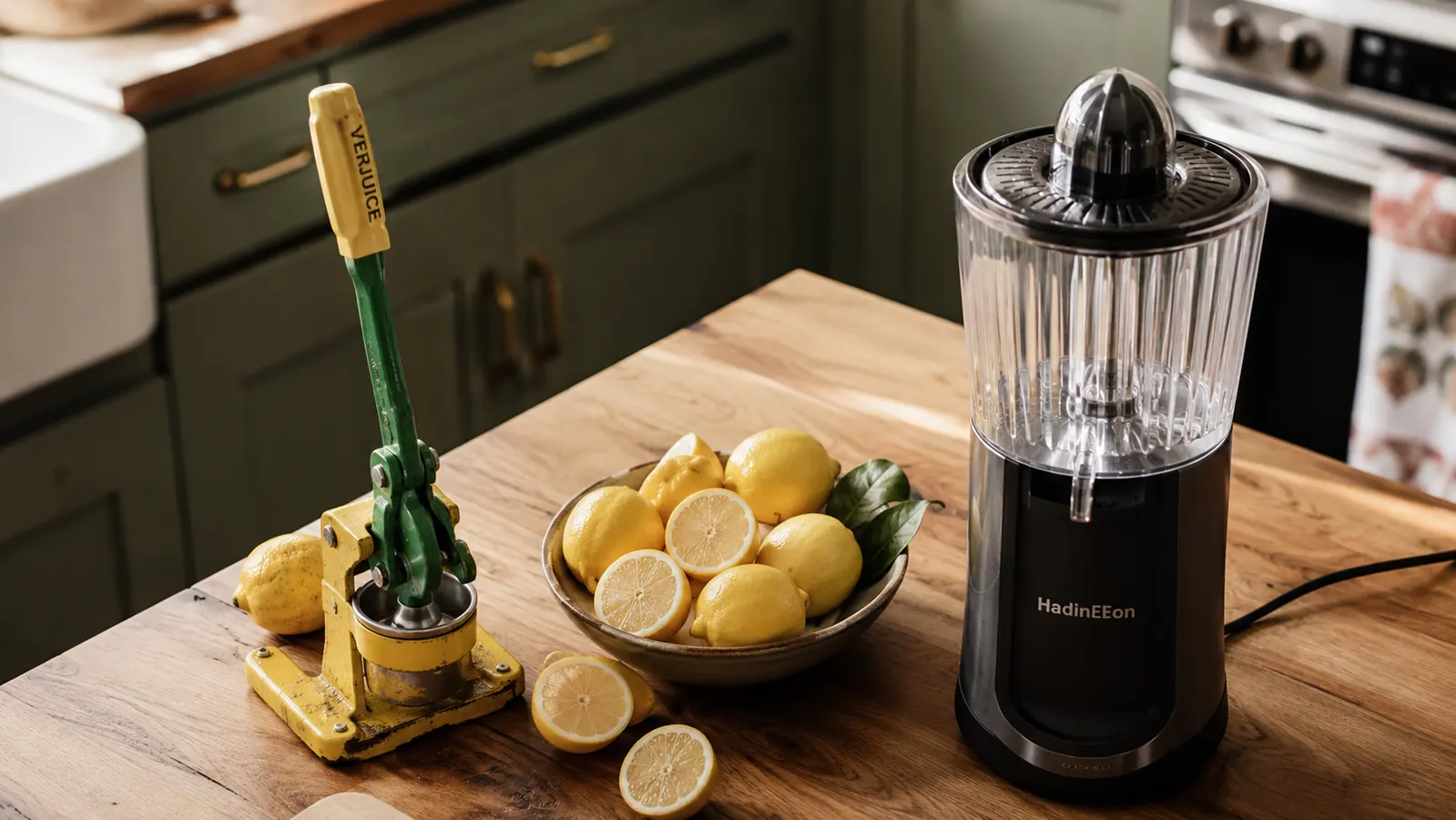
The short answer: unless you're juicing oranges or grapefruit by the pitcher most mornings, the Zulay Metal 2-In-1 Lemon Squeezer beats an electric citrus juicer for the way most of us actually cook. I ran my $14.99 Zulay hand press against a friend's Breville 800CPXL Citrus Press over two weeks, putting both through the same lemons, the same vinaigrettes, marinades, and whiskey sours, timing every batch and measuring the juice that came out of each. The electric machine is a genuinely well-built appliance. It's also solving a problem I don't have on most weeknights.
I go through close to a dozen lemons a week between weeknight dinners and Sunday cocktails, almost always one or two at a time, not a full pitcher's worth. That single detail ended up mattering more than anything else in this comparison. So before you spend more than ten times as much on a countertop machine, here's exactly where each tool pulled ahead, and where it fell flat, based on twenty lemons split evenly between them.
| Lemon Squeezer | Electric Juicer | |
|---|---|---|
| Price | $14.99 today's price, one-time buy | $150 to $250+ today's price for a name-brand electric citrus press |
| Prep time for 2 lemons | Under 30 seconds, no setup, nothing to plug in | 2 to 3 minutes counting assembly, plugging in, and pulp settings |
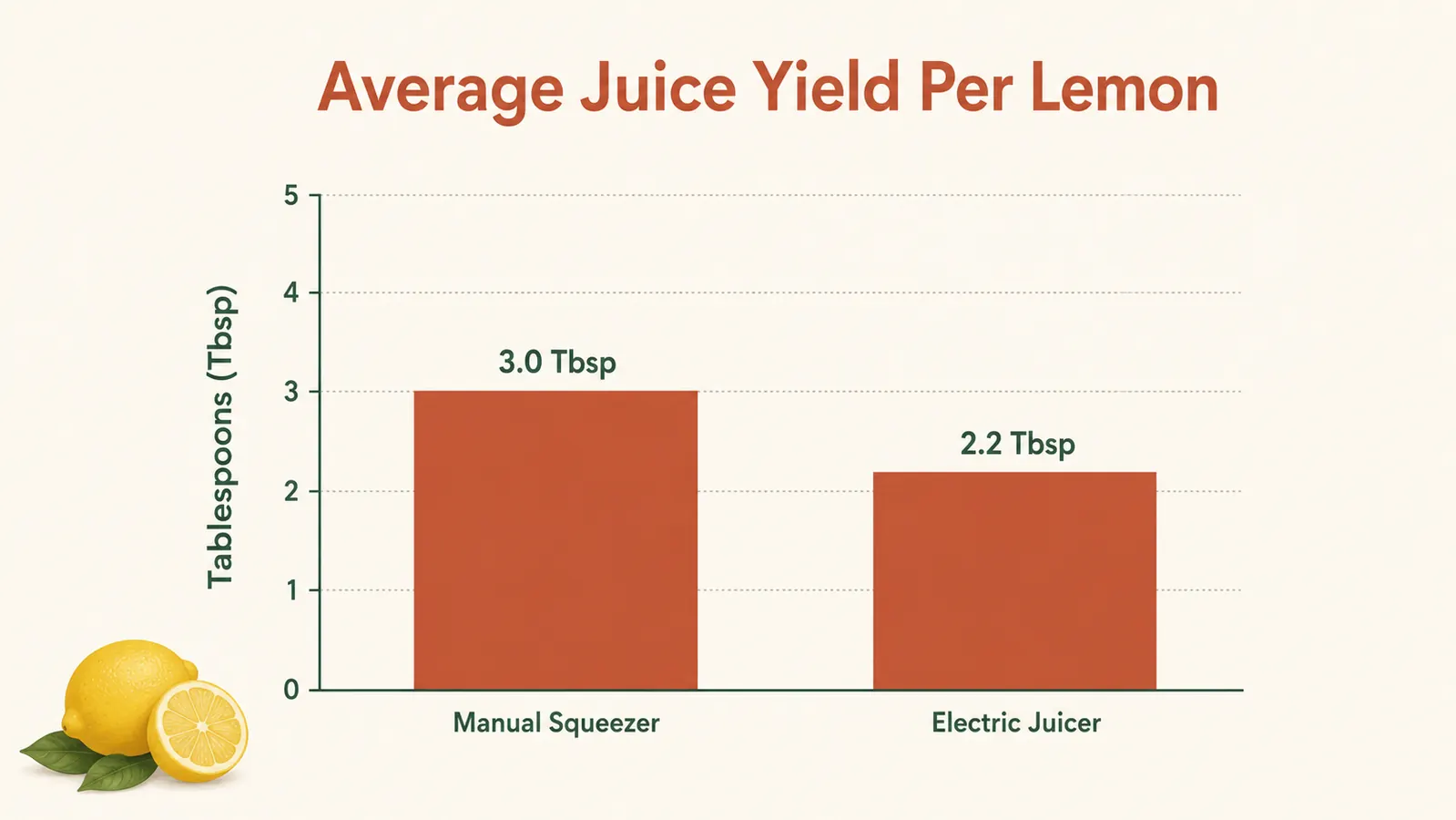
| Juice yield per medium lemon | About 3 tablespoons, hinge leverage squeezes it dry | About 2 to 2.5 tablespoons, depends how hard you press down |
| Seed control | Perforated bowl catches seeds automatically, zero got through across 10 lemons tested | Reamer catches most pulp, but seeds slipped through on 3 of 10 lemons tested |
| Cleanup time | Rinse under the tap, dishwasher-safe, under a minute | Reamer cone, pulp basket, and pitcher to hand wash, 5+ minutes |
| Counter and storage space | Fits flat in a drawer, hangs on a hook | Permanent counter appliance, roughly 14 inches tall |
| Noise level | Completely silent | Motor hum loud enough to notice in a quiet kitchen at 6am |
| Best batch size | 1 to 4 pieces of citrus, lemons and limes especially | Large batches, a full pitcher of fresh orange or grapefruit juice |
| Learning curve | None, works the same the first time and the hundredth | A few batches to dial in pressure and pulp settings |
How I Tested Both
I ran this comparison in my own kitchen over two weeks, not a lab. I bought two separate three-pound bags of lemons on two different grocery runs so I'd get a real mix of sizes, then split them evenly, ten squeezed by hand with the Zulay, ten juiced electrically with a friend's Breville 800CPXL that lives on her counter for her family's daily orange juice habit. Every lemon got weighed before cutting, then the juice from each one got measured in a glass measuring cup right after, so the tablespoon numbers in the table above are averages from real batches, not estimates.
I also ran both tools through actual cooking, not just isolated juice-yield tests. Vinaigrette for a big salad, a marinade for grilled chicken thighs, and a round of whiskey sours for a Friday night with friends, using whichever tool made sense for that specific job. That's where the setup and cleanup differences showed up the most, because a recipe doesn't pause while you assemble an appliance or hand wash three parts before moving on to the next step.
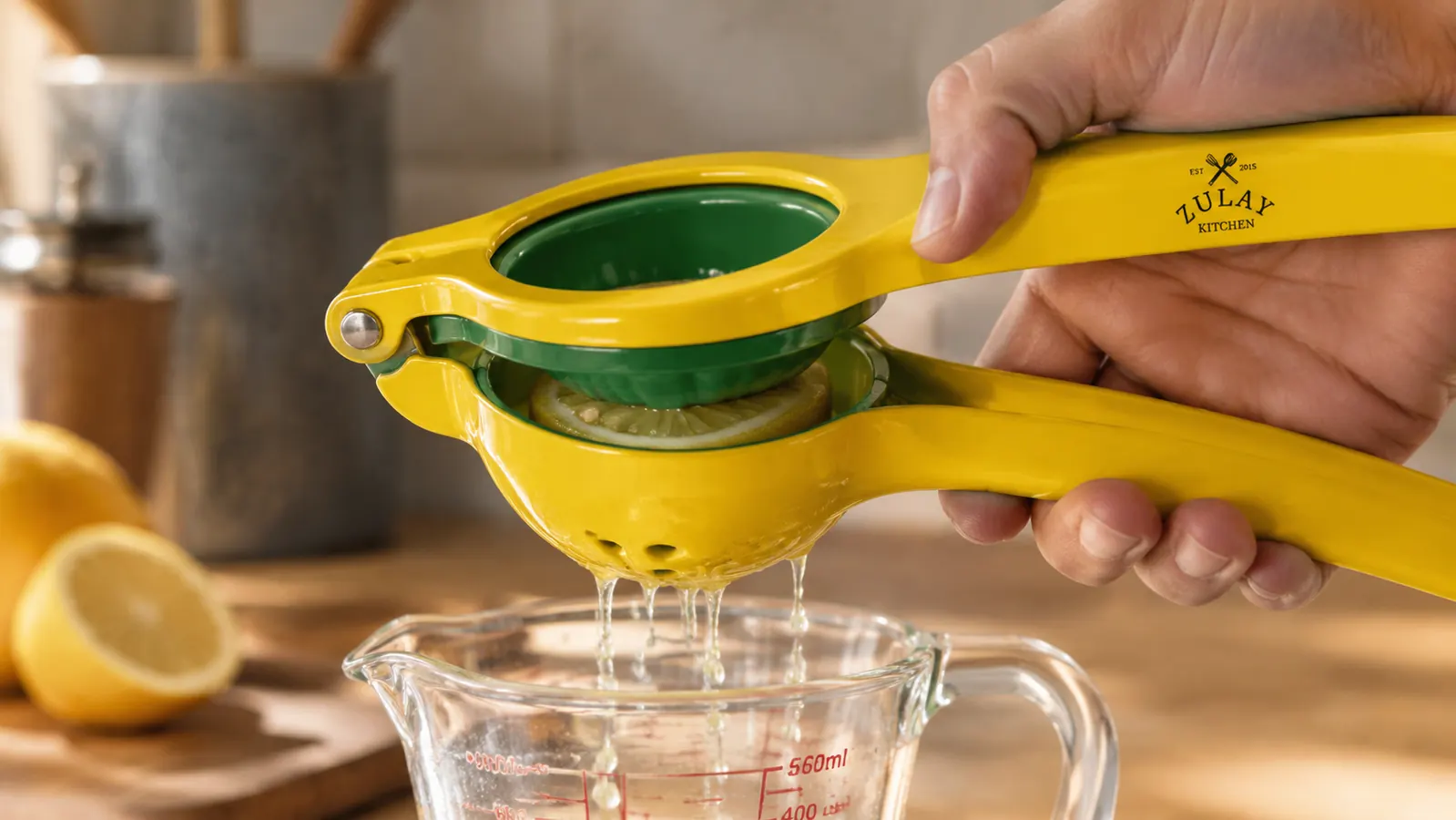
Where the Zulay Squeezer Wins
Speed for a small batch is the obvious win, but it's the total lack of setup that actually changed my weeknight routine. Chicken piccata needs the juice of about two lemons, and with the Zulay I can halve both, press them, and have juice in the pan before the butter finishes browning. There's no cord to find, no base to lock into place, nothing to wait on. I pulled it out of a drawer, used it, and rinsed it under the tap while the pan was still going. The electric juicer never got that kind of use out of me on a Tuesday, because setting it up and tearing it down afterward took longer than the actual juicing did on a two-lemon job.
Seed control was the bigger surprise. Across the ten lemons I ran through the Zulay, not a single seed made it into the juice, the perforated bowl catches them every time and you flick them out in one motion before your next lemon. The Breville's reamer is designed to spin seeds and pulp out of the way too, but on three of the ten lemons I juiced electrically, a stray seed ended up in the collection pitcher anyway, usually from a lemon that wasn't quite centered on the cone. For a vinaigrette that gets whisked and strained anyway it barely matters. For a glass of lemon water or a cocktail, fishing out a seed is a small annoyance I didn't have with the hand press.
Cleanup and storage tipped the scale even further. The Zulay is one solid piece of enamel-coated metal, rinse it, top-rack it in the dishwasher, and it goes back in the utensil drawer flat. The Breville has a reamer cone, a pulp-control basket, and a pitcher, three separate parts that all need hand washing or a careful dishwasher run, and it lives permanently on the counter afterward because it's not the kind of appliance you want to lift in and out of a cabinet every time. In a smaller kitchen, that counter real estate matters more than the spec sheet ever will.
Where the Electric Juicer Wins
The Breville earns its keep on volume, full stop. When I juiced eight oranges for a Sunday brunch pitcher, my hand and wrist would have been done well before orange number six with a manual press built for lemons and limes. The electric reamer just kept going, one orange after another, with almost no extra effort per fruit. If your house does fresh-squeezed orange juice a few mornings a week, or you're regularly juicing citrus by the pitcher rather than by the wedge, that's exactly the job an electric juicer was built for, and the Zulay was never designed to compete there.
It's also worth saying plainly that the Zulay's perforated bowl is sized for lemons and limes, not full-size oranges or grapefruit. I tried fitting half a navel orange into it during testing and it barely worked, the fruit was too big to sit properly and juice sprayed out the sides more than it dripped through the holes. If citrus prep in your kitchen means grapefruit for breakfast as often as lemons for dinner, the electric machine is doing a job the hand press genuinely can't.
Most of us aren't running a juice bar. We're juicing one lemon for tonight's dressing.
The Zulay Metal 2-In-1 Lemon Squeezer gets a lemon or lime from whole to juiced in under 30 seconds, no cord, no assembly, no counter space lost. It's currently one of the highest-rated citrus tools on Amazon for exactly this reason.
Amazon Check Today's Price on Amazon →The Breville makes a lot of sense at a juice bar pouring orange juice all morning. My kitchen isn't a juice bar.
Where the Zulay Squeezer Falls Short (Being Honest)
It's not a perfect tool, and I don't want to pretend otherwise. The bowl really is too small for oranges or grapefruit, so if your citrus habits go beyond lemons and limes, you'll want something else on hand for the bigger fruit. It's also a two-hand tool, so it's slower than a simple handheld reamer if you're only juicing a single lemon wedge for a cup of tea and don't need much pressure. And after several months of regular dishwasher use, the enamel coating on mine has picked up a couple of small chips near the hinge, purely cosmetic so far, but worth knowing if you're expecting it to look brand new forever.
The Breville has its own honest downsides too. Beyond the price and the counter space, it's genuinely loud for something used first thing in the morning, and the pulp-control dial takes a few batches to get right before the juice comes out the way you actually want it. Neither tool is flawless. They're just built for different amounts of citrus.
The Juice Yield Test, Lemon by Lemon
I weighed the juice from ten lemons squeezed by hand press and ten juiced electrically, using lemons from the same three-pound bag so the ripeness and size were reasonably matched. The Zulay averaged just under 3 tablespoons per lemon. The Breville averaged closer to 2.2 tablespoons. That gap surprised me, because I expected the motorized reamer to out-squeeze a hand tool, but the hinge on the Zulay applies a lot of direct pressure right at the point where the lemon flesh is pressed against the perforated bowl, and that leverage seems to matter more than motor speed for a fruit as small as a lemon.
The one lemon that skewed the Breville's numbers was a smaller one, barely two inches across, that didn't seat well on the reamer cone and spun without much contact. That's a real-world issue with electric reamers and undersized fruit, not a fluke of my test. On oranges and grapefruit, where the fruit is bigger and seats the cone properly, I'd expect that gap to close or even reverse in the Breville's favor. For lemons specifically, the manual press had the edge every time.
What About Limes and Smaller Citrus
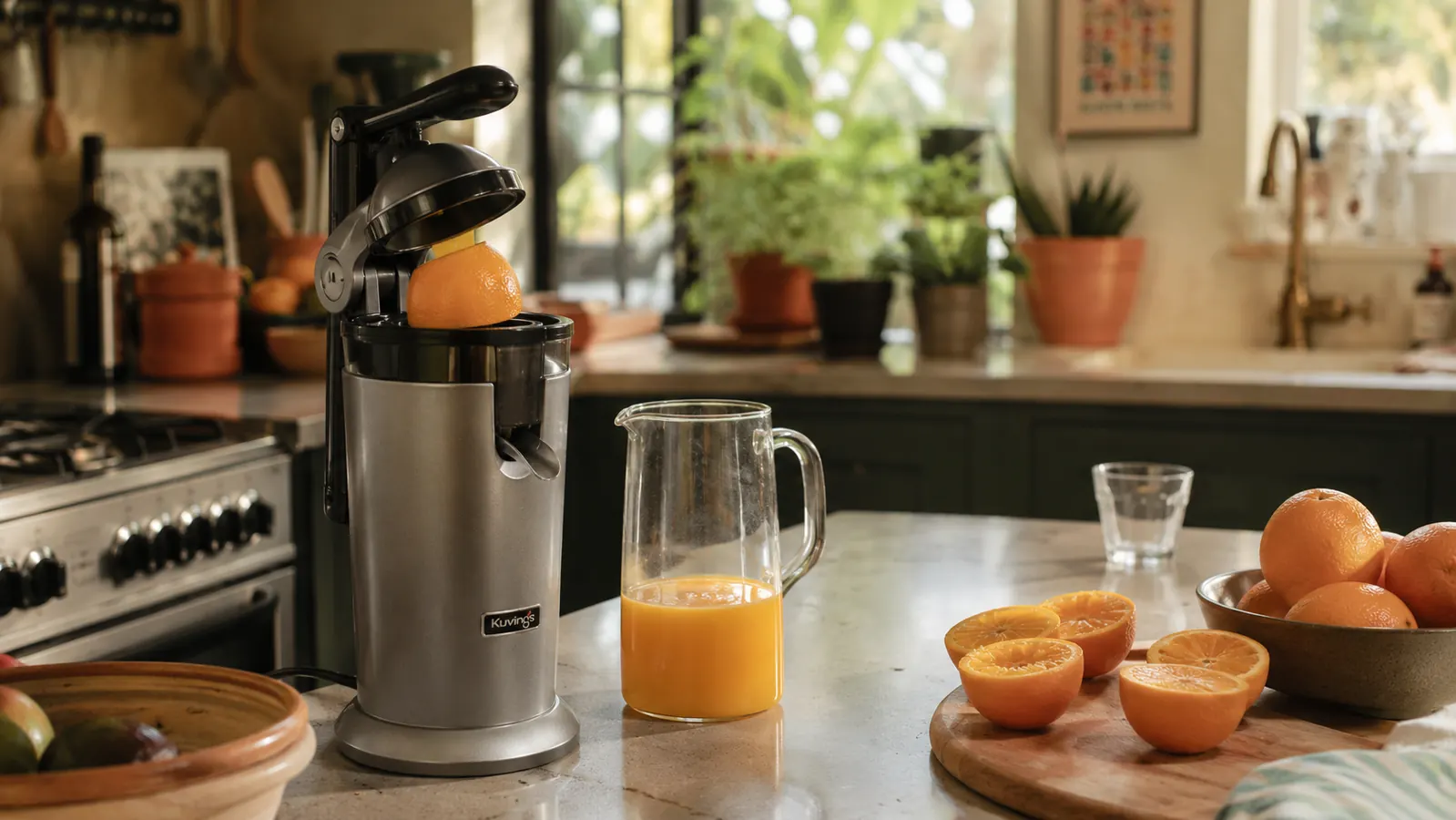
Limes are where the Zulay's two-in-one design really shows its value. The same perforated bowl that handles lemons works just as well on limes, no parts to swap. I ran six limes through it for a batch of margaritas and got the same clean, seed-free results I saw with lemons. The Breville technically has a smaller reamer cone sized for limes too, but swapping cones mid-recipe when you're also juicing lemons for the same drink is an extra step the hand press simply doesn't require. For key limes, both tools work, but the smaller fruit is easier to control by hand than it is to hold steady against a spinning cone.
Who Should Buy Which
If your citrus use looks like mine, a lemon or two for tonight's dressing, a lime for tacos, a couple of lemons for a pitcher of lemonade on a hot Saturday, the Zulay Metal 2-In-1 Lemon Squeezer is the right call and it isn't close. It's fast, it's silent, it stores flat in a drawer, and at under fifteen dollars it pays for itself the first week you use it instead of twisting lemons by hand.
If your household drinks fresh orange or grapefruit juice several mornings a week, hosts brunch regularly, or juices citrus by the pitcher rather than by the wedge, the extra cost, counter space, and cleanup of an electric juicer buys you real convenience at that volume. Some kitchens genuinely need both, a hand press for the everyday lemon or lime and an electric juicer for weekend orange juice by the pitcher. Mine only needed one, and it's the one that lives in my drawer, not on my counter.
Twenty lemons, more juice, zero seeds, and a lot less cleanup. That's the trial that settled it for me.
At under fifteen dollars, the Zulay Metal 2-In-1 Lemon Squeezer earns its drawer space the first time you use it, no cord, no counter space, no cleanup marathon.
Amazon Check Today's Price on Amazon →