Three years ago I would have told you a hand masher was all anyone needed for mashed potatoes. Then my mother-in-law showed up to Thanksgiving with a PriorityChef stainless steel potato ricer, worked through five pounds of Yukon golds in about the same time I usually spend mashing, and the result was smoother than anything I'd made in a decade of hosting. I bought one the following week for $21.99 and it has been in weekly rotation ever since, mostly for Sunday dinner mashed potatoes for my family of four, plus every holiday since.
So which one actually wins? Short answer: the ricer wins on texture, consistency, and lump-free results every single time. The hand masher wins on speed for small batches and on giving you a chunkier, more rustic texture when that's what you want. If you've ever served gluey or lumpy mashed potatoes and blamed the recipe, I can tell you from testing both tools side by side, back to back, twice, that the tool was probably the actual problem, not your technique.
How I Ran the Test
I bought six pounds of Yukon gold potatoes, peeled and cubed them the same size, and boiled two equal three-pound batches in separate pots with the same amount of salted water, timed to come off the heat within a minute of each other. Both batches got the same four tablespoons of butter, the same half cup of warmed whole milk, kosher salt, and a pinch of white pepper. One batch went through the PriorityChef ricer with the coarse disc, the other got worked with a standard wire hand masher, the kind most people already own in a kitchen drawer.
I timed each batch from first press or first mash to a texture I'd actually serve to guests, and I had my husband taste both without knowing which was which. He picked the riced batch as smoother within one bite, no hesitation. I also ran the test a second time a week later using russets instead of Yukon golds, since starchy potatoes behave differently under pressure, and the results held. I even asked my neighbor, who has never used a ricer in her life, to try both, and she guessed correctly which bowl came from which tool just by texture alone.
| Potato Ricer | Hand Masher | |
|---|---|---|
| Price | $21.99 | $8 to $12 for a standard wire masher |
| Texture Result | Silky, fluffy, restaurant-smooth, zero lumps | Chunkier, rustic, some lumps unless you overwork it |
| Time for 3 lbs | About 6 minutes of steady pressing | About 4 minutes of mashing |
| Hand and Wrist Effort | Steady downward pressure, low strain | Repetitive twisting motion, more wrist fatigue |
| Best For | Holiday dinners, guests, restaurant-style texture | Quick weeknight batches, chunky rustic mash |
| Risk of Gluey Potatoes | Very low, cells stay mostly intact | Higher if you overwork the starch |
| Cleanup | Rinses easily, dishwasher safe, one extra part to dry | Rinses in seconds, no disassembly |
| Storage Space | About 12 inches long, takes a drawer slot | Compact, fits in a small utensil crock |
| Other Uses | Baby food, cauliflower mash, spaetzle, apple sauce | Mostly limited to mashing |
Where the Ricer Wins
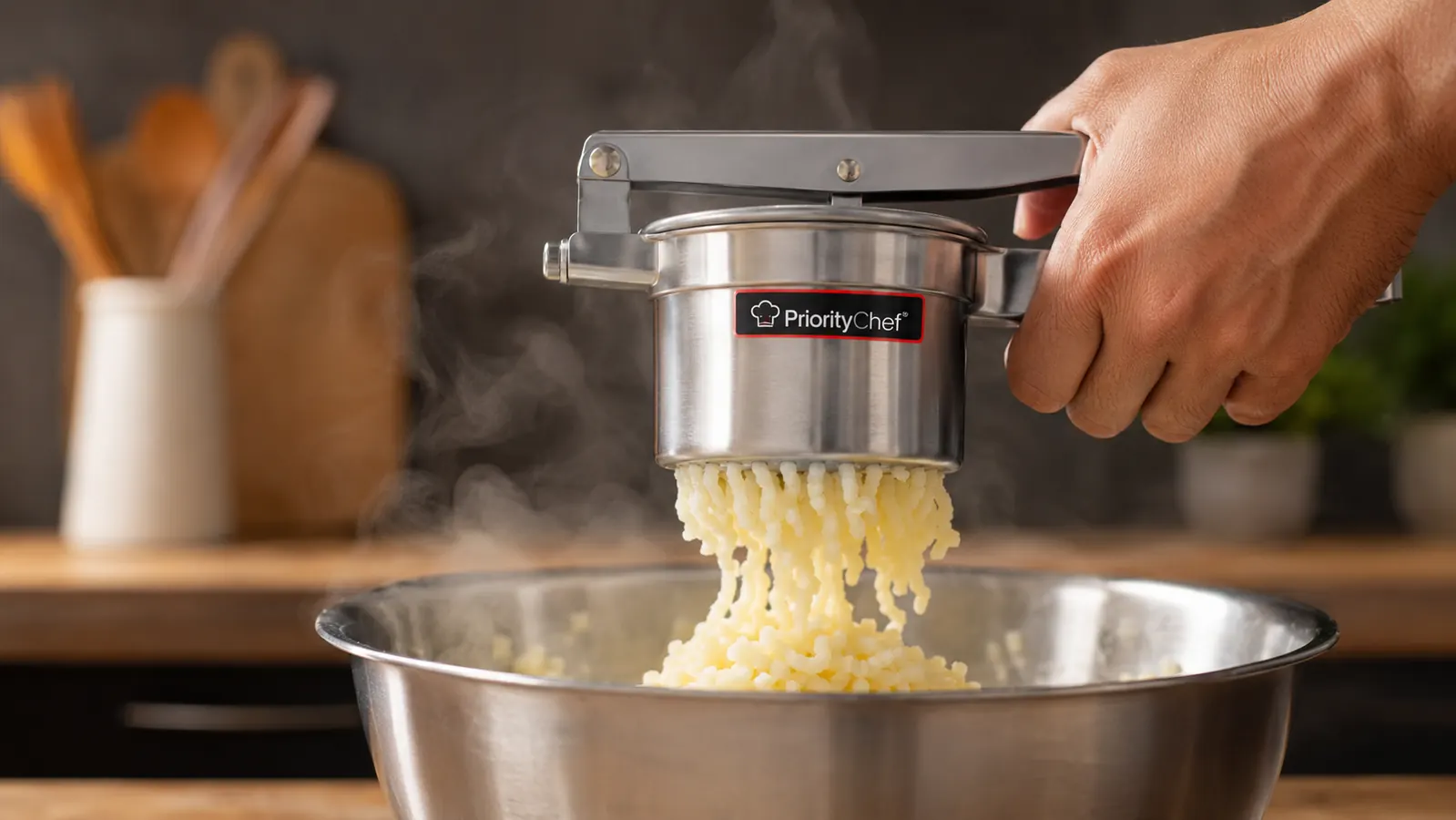
The biggest difference is texture, and it isn't close. A ricer forces cooked potato through small holes in one pass, which breaks the flesh apart without rupturing the starch cells the way repeated mashing does. That's the actual science behind gluey mashed potatoes. Overworked starch cells release amylose and turn the whole bowl gummy. With the ricer, I press once and I'm done, no extra strokes, no extra risk. The result comes out light and almost fluffy before I've even added butter, and it holds that texture even after sitting covered on the counter for twenty minutes while the rest of dinner finishes.
The PriorityChef ricer also earns its keep outside of mashed potato night. I've used the same tool to rice cauliflower for a low-carb side, puree cooked apples for homemade applesauce for my kids, and press out spaetzle dough directly into boiling water for a quick weeknight dinner. A hand masher can't do any of that. If you're the kind of cook who wants one tool to earn its drawer space several different ways, the ricer pulls a lot more weight, and I've found myself reaching for it at least once outside of a potato context most weeks.
Where the Hand Masher Wins
I'm not going to pretend the masher has nothing going for it. It's faster for a small, casual batch, there's no assembly or disc to swap, and it takes up almost no space in a drawer. On a random Tuesday when I'm making mashed potatoes for two people alongside a rotisserie chicken, I sometimes reach for the masher just because it's quicker to grab off the hook and quicker to rinse when I'm trying to get dinner on the table fast.
The masher also wins if you actually like some texture in your mashed potatoes. My dad has always preferred a chunkier, more rustic mash with visible potato pieces, closer to something you'd get at a diner than a steakhouse, and no ricer is going to give him that. A masher, used lightly with just a few passes, leaves that texture intact in a way a ricer physically can't, since the ricer's small holes turn everything into a uniform ribbon whether you want them to or not.
Tired of lumpy or gluey mashed potatoes ruining a good dinner?
The PriorityChef potato ricer is the tool that actually fixed it in my kitchen. One press, no gummy starch, restaurant-smooth results every time.
Amazon Check Today's Price on Amazon →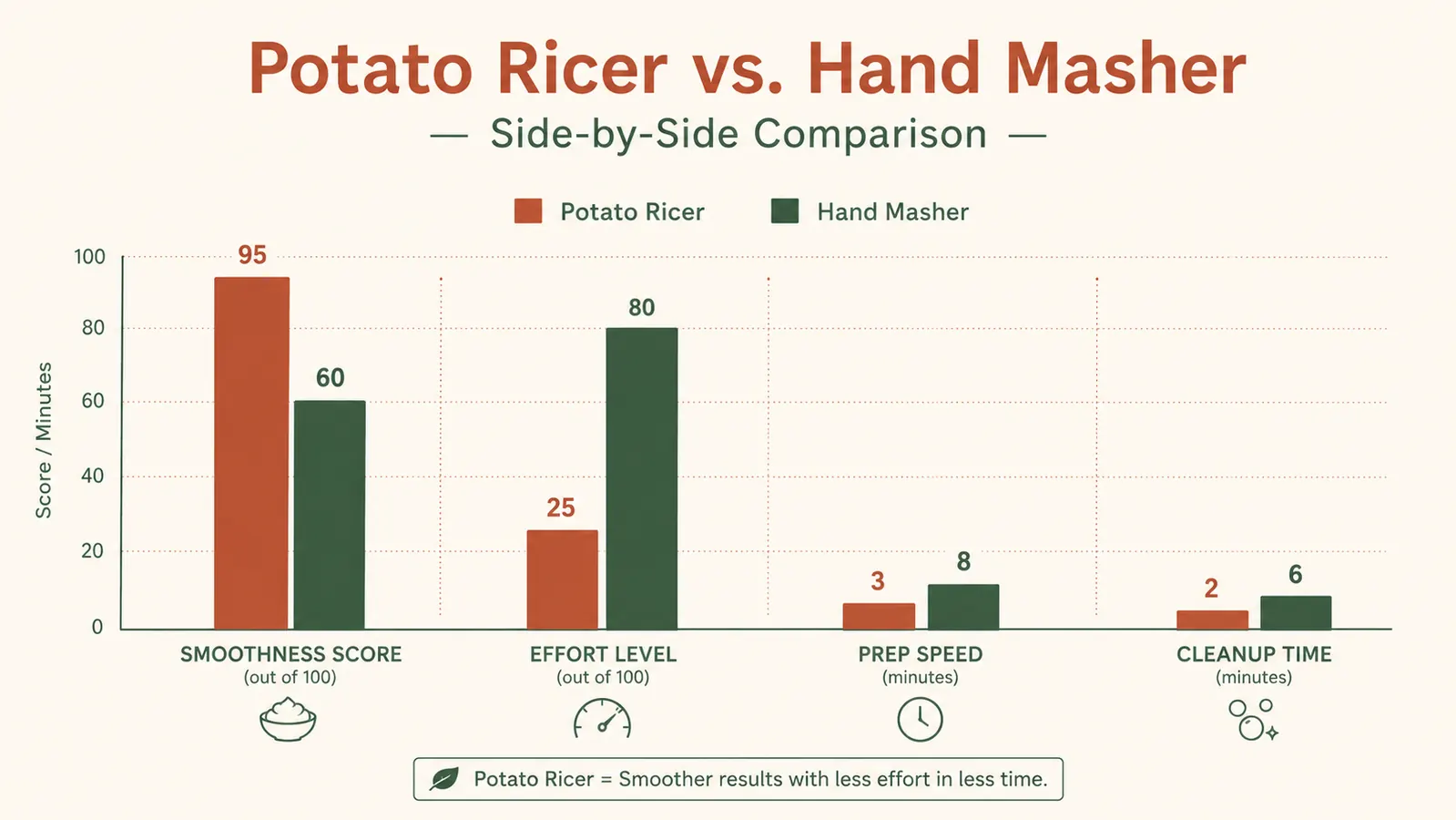
The Texture Difference, Up Close
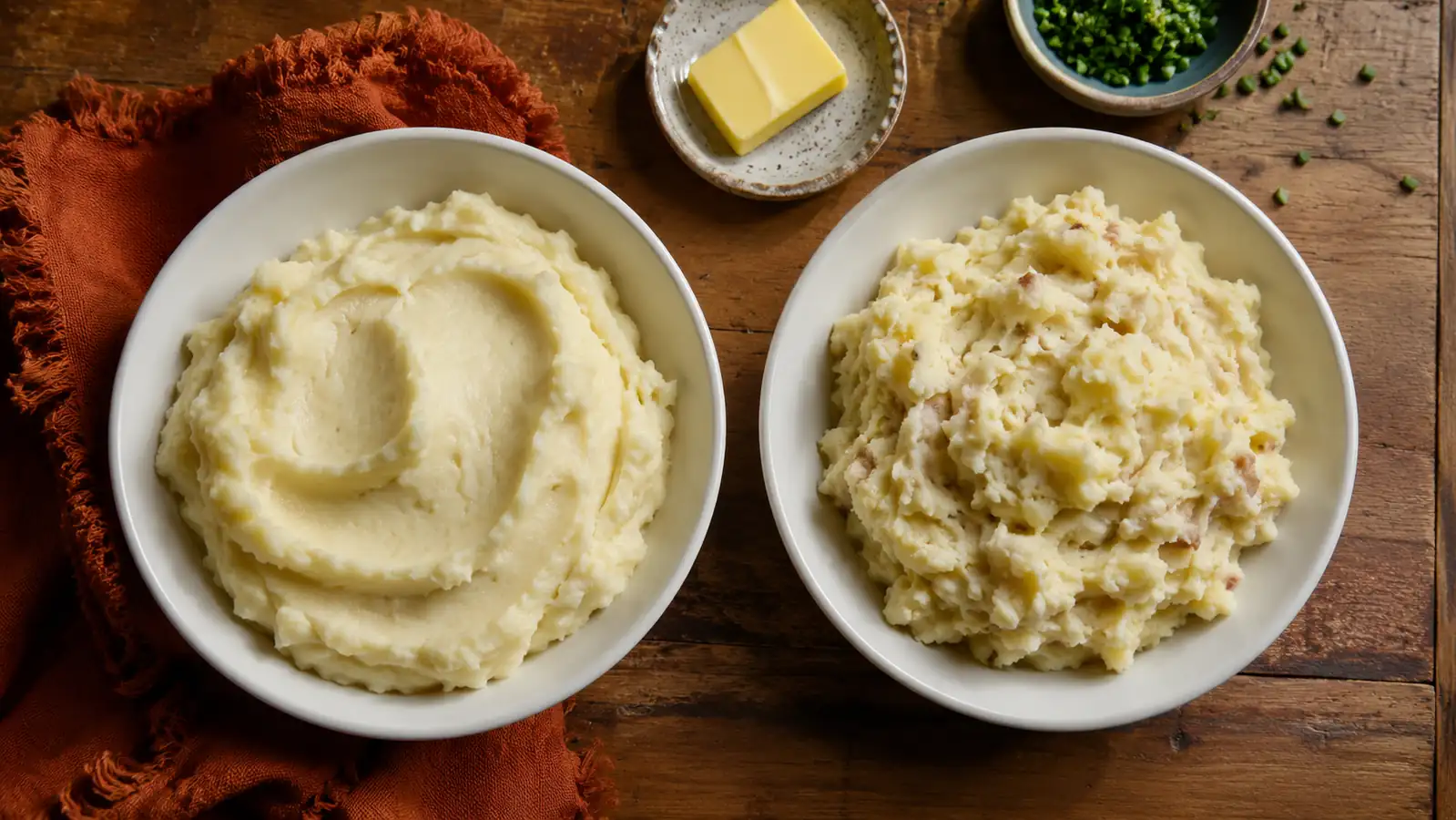
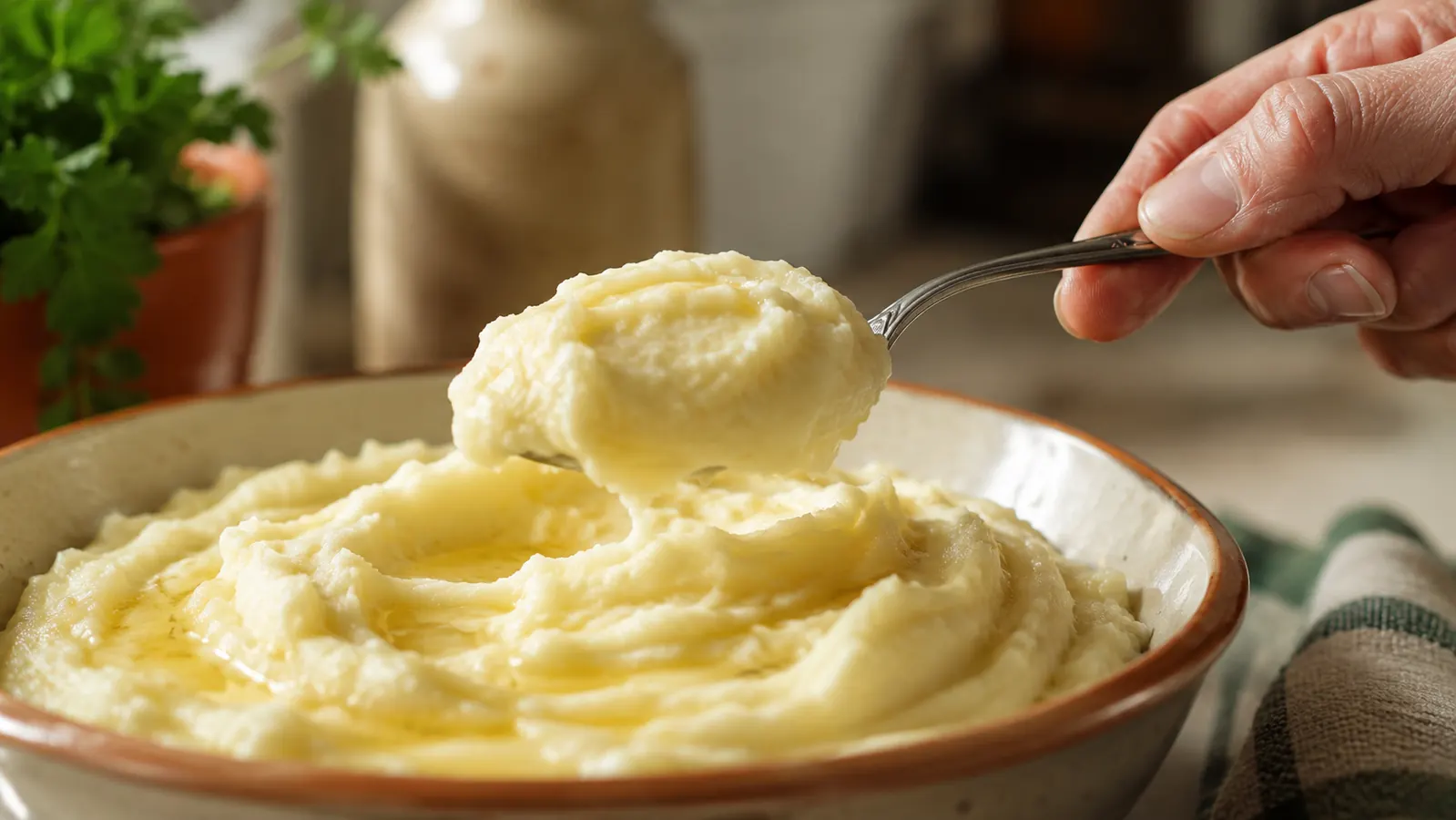
When I scooped both bowls side by side after the first test, the difference was visible before either one hit a plate. The riced batch held its shape in soft, ribbon-like mounds, almost like piped frosting, and there wasn't a single lump anywhere in the bowl even though I only pressed each potato piece once. The mashed batch had small pockets of firmer potato scattered through it, not a flaw exactly, but a texture that reads as homemade-rustic rather than restaurant-smooth, the kind of mash you'd expect from a home kitchen instead of a catered dinner.
The starchier russet batch made the difference even more obvious. Russets release more starch under repeated mashing, and by the third minute of mashing that batch, I could feel the texture starting to turn slightly tacky and dense under the masher. The riced russet batch never got there, because I wasn't repeatedly working the same potato flesh over and over. If you tend to use russets for mashed potatoes because that's what's usually on sale at the grocery store, the ricer is doing you a bigger favor than it would with a naturally creamier potato like Yukon gold.
Effort and Wrist Fatigue
This one surprised me. I assumed the masher would be the easier tool since it's smaller and more familiar, but the repetitive twisting and pressing motion of mashing actually tired my wrist out faster than the ricer's straight-down press. The ricer uses two long handles like an oversized garlic press, so the leverage is doing most of the work, and I'm using my whole forearm and shoulder instead of just my wrist and fingers.
For a small batch this barely matters. But on Thanksgiving when I'm working through eight or nine pounds of potatoes for a table of twelve, my wrist genuinely feels it with the masher by the second pot, and I've had to switch hands halfway through in past years. The ricer, even with more total presses needed for a bigger batch, never left my hand sore the next morning. If you cook for a crowd more than once or twice a year, this is a real practical difference, not just a texture preference, and it's one nobody mentions until they've actually felt it.
Cleanup: Which One's a Bigger Pain
The masher wins here, no argument. Rinse it under hot water for ten seconds and you're done, no parts, no disassembly. The ricer has a hopper, a lever, and a removable disc, and starchy potato residue likes to hide in the small holes if you let it sit too long. I've learned to rinse mine immediately after use, before the potato dries and hardens in the holes, and it goes in the dishwasher fine after a quick pre-rinse under the tap. It's not a huge chore, maybe an extra thirty seconds compared to the masher, but it's not nothing either, especially on a busy holiday when every extra step at the sink adds up.
The one cleanup advantage the ricer has is that it's genuinely dishwasher safe end to end, solid stainless steel construction, no plastic parts to worry about warping from heat over time. My old wire masher had a plastic-coated handle that started cracking after about two years of regular dishwasher cycles, eventually splitting enough that I stopped trusting it near boiling water. The ricer, going on its second year now, still looks and works like it did the day I bought it, with no rust and no loose joints.
Durability After Two Years of Weekly Use
I want to be honest about wear and tear since I've now used the PriorityChef ricer close to a hundred times. The stainless steel body hasn't pitted or discolored, the hinge still moves smoothly with no wobble, and the coarse disc still sits flush without gaps that would let unpressed potato chunks slip through. The only change I've noticed is a very faint scratch pattern on the inside of the hopper from repeated use, purely cosmetic, no effect on how it performs.
My old hand masher, by comparison, went through two replacements in the same stretch of time, both from cracked plastic handles rather than a bent mashing head. That's a small but real cost difference over a few years that doesn't show up in the sticker price comparison. If you're weighing this as a long-term kitchen investment rather than a one-time purchase, the ricer's all-metal build has held up noticeably better in my house.
Who Should Buy Which
If mashed potatoes show up at your table for holidays, weekly family dinners, or anytime you're cooking to impress, get the ricer. The texture difference alone is worth the $21.99, and the fact that it also handles cauliflower, apples, and baby food means it's not a one-trick drawer item. If you only make mashed potatoes occasionally, prefer a chunkier texture, and already own a masher that works fine for you, there's no urgent reason to replace it. But if you've ever wondered why your mashed potatoes never come out as smooth as a restaurant's, I can tell you from testing both tools that the ricer is very likely the missing piece, not your recipe.
Ready for mashed potatoes without a single lump?
The PriorityChef ricer is the tool I reach for every single Sunday now. Heavy stainless steel, dishwasher safe, and it makes the smoothest mash I've ever served.
Amazon See Current Price on Amazon →