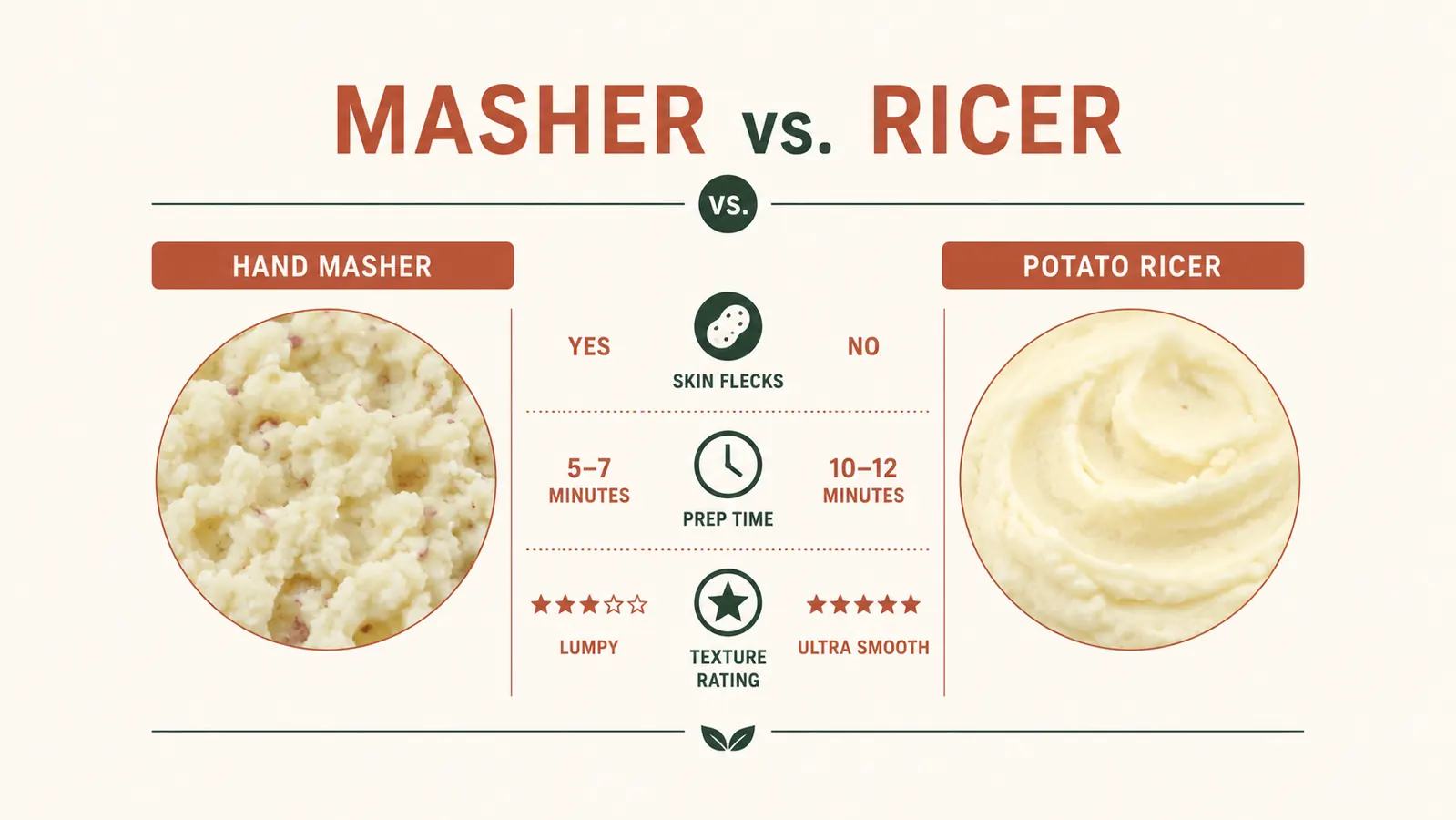
I made mashed potatoes with a hand masher for probably fifteen years before I admitted the lumps weren't my fault. I tried Yukon Golds instead of russets. I tried warming the milk first. I tried mashing harder, which just turned the edges gluey while the center stayed chunky. None of it worked because the tool itself couldn't push cooked potato through anything fine enough to break up every fiber. A potato ricer fixed that in one Sunday dinner, and I haven't gone back to a masher since.
The one I use is the PriorityChef 15oz stainless steel potato ricer, and it's been in my drawer for over a year now, pulled out for every holiday mash, every batch of gnocchi dough, and most weeknight sides. Here are the ten reasons it earned a permanent spot next to my colander instead of getting shoved to the back with the melon baller.
Skip the lumps this Sunday
If you're still mashing by hand, the fix is a $22 gadget that takes up less drawer space than a spatula.
Amazon Check Today's Price on Amazon →It presses potatoes through small holes instead of crushing them
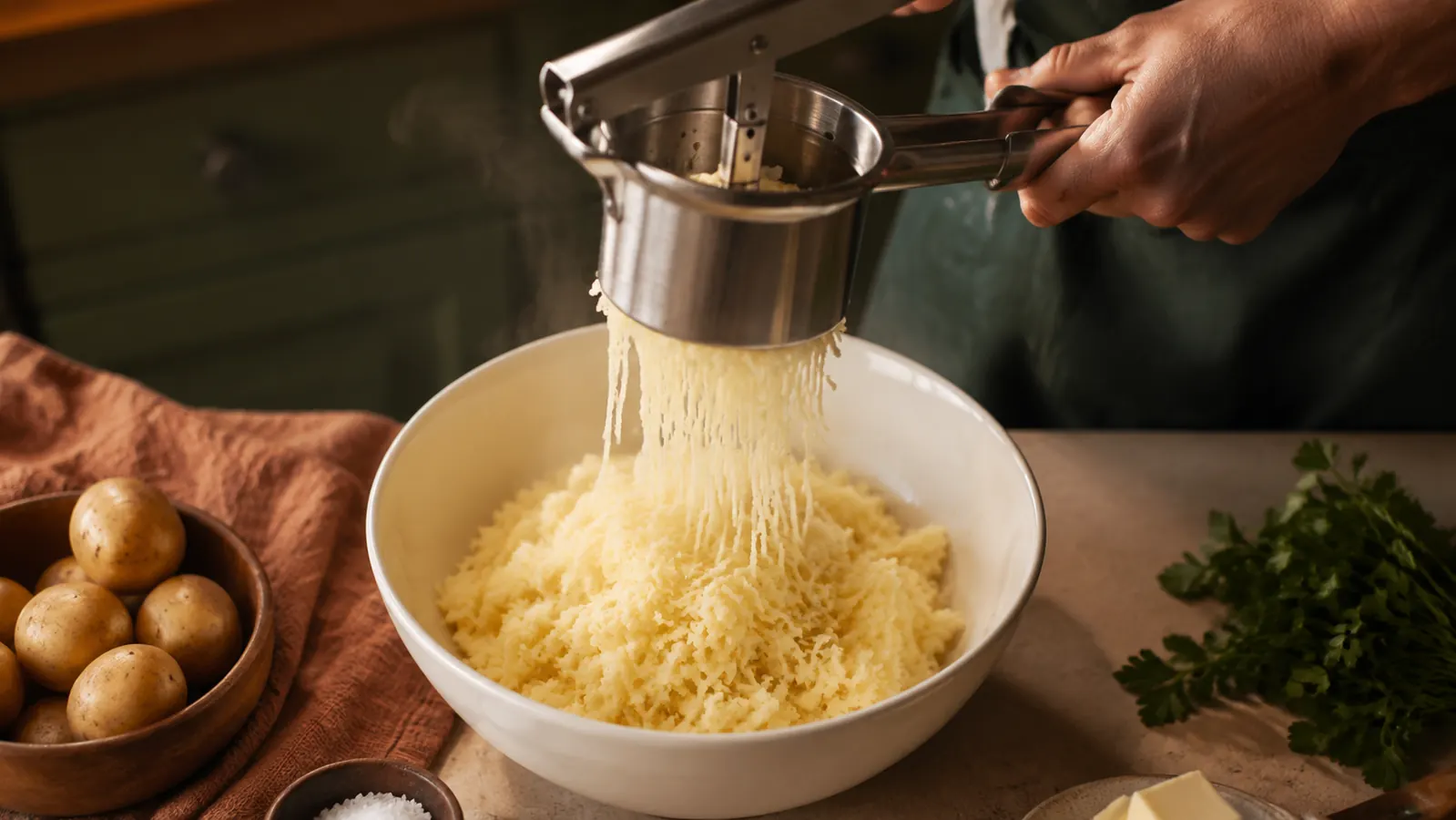
A hand masher works by smashing potato chunks against the sides of the pot. That leaves fibrous strands and skin bits behind no matter how long you go at it. A potato ricer forces the whole potato through a perforated basket, so every bit comes out the other side already broken into thin, even ribbons. There's no crushing involved, just clean extrusion, which is why the texture comes out closer to a fine snow than a chunky paste.
It catches the skins automatically if you don't peel first
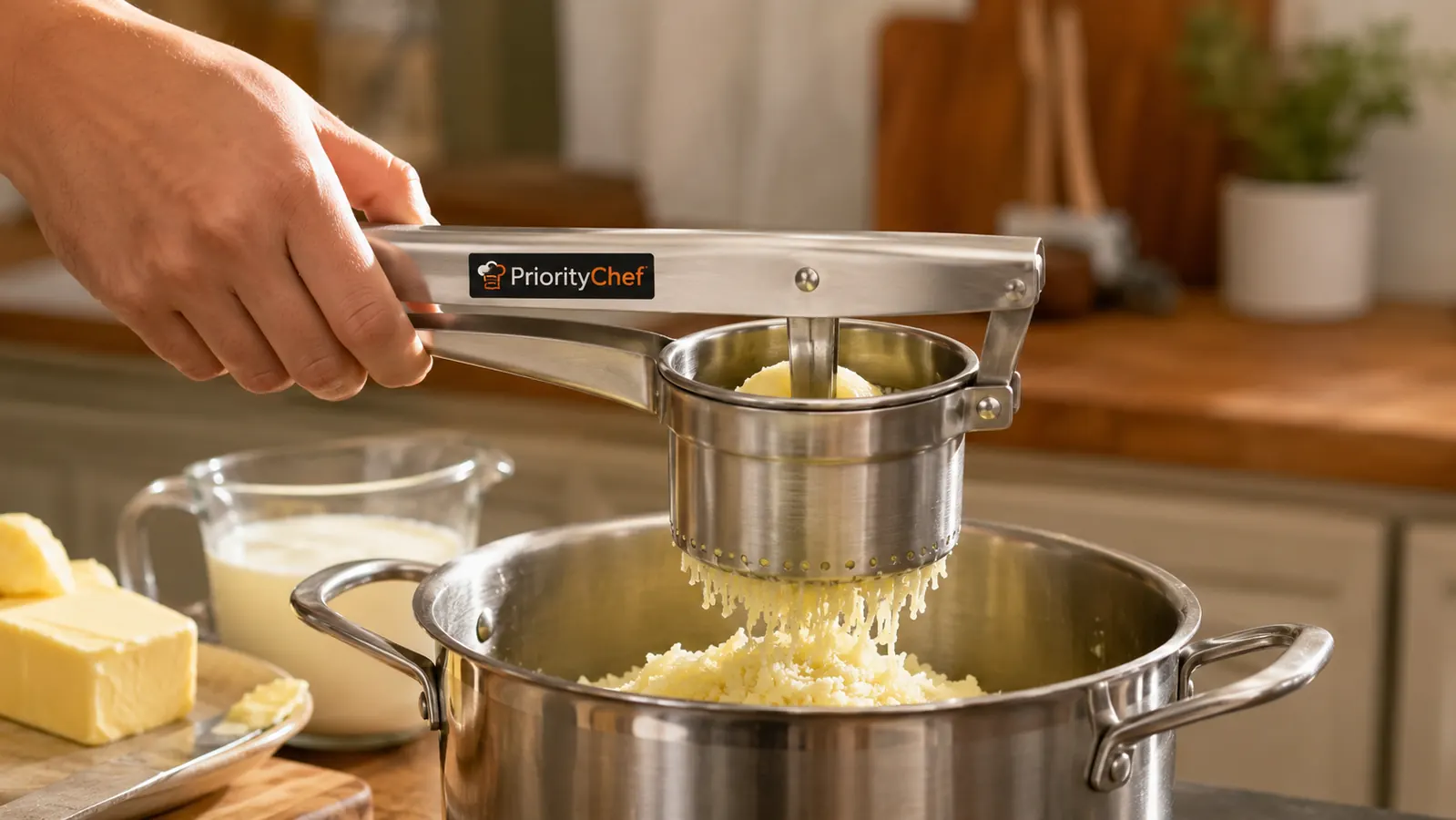
I used to peel every potato before boiling, which meant standing over the sink for ten minutes with a paring knife and losing a chunk of the potato with the peel. Now I boil my Yukon Golds skin-on, cut them in half, and load them straight into the ricer basket. The skins stay behind in the basket while the flesh presses through smooth. It saves me the peeling step entirely and the potatoes taste better for having cooked with their skins on.
It never overworks the starch
This is the one that took me longest to learn. Mashed potatoes turn gluey and gummy when you overwork the starch cells, which happens easily with a hand masher or a stand mixer because you're grinding and stirring at the same time. A ricer only does one motion, a single downward press, so the starch cells stay mostly intact. That's the actual mechanical reason ricer mash comes out fluffy instead of pasty, not some magic in the tool itself.
It works in batches fast enough for a full holiday pot
I was worried a ricer would be slower than a masher for a big Thanksgiving batch, five pounds of potatoes for eleven people. It's actually faster once you get a rhythm going. I press one potato half, dump the basket, load the next, and I'm through five pounds in about six minutes. Compare that to the two-handed arm workout a masher turns into once the pot cools and the potatoes firm up.
It's the same tool professional kitchens use for gnocchi
I started making gnocchi from scratch last winter, and every recipe I found called for a ricer, not a masher. The reason is consistency. Gnocchi dough needs potato that's uniformly fine or the dough won't hold together right and you get dense, gummy dumplings. My PriorityChef ricer does double duty now, mashed potatoes on Sunday, gnocchi dough on a random Tuesday when I'm feeling ambitious.
The stainless steel body doesn't stain or hold potato smell
My old plastic masher yellowed within a year and held onto a faint starchy smell no matter how I washed it. The ricer I use now is stainless steel top to bottom, including the basket and the handles, so nothing stains and nothing absorbs odor. It goes straight into the top rack of my dishwasher after dinner and comes out looking new.
It handles more than just potatoes
I use mine for cauliflower mash now too, which used to turn watery and grainy with a masher because cauliflower holds more moisture than potato. The ricer presses out excess water as it extrudes, so the texture actually improves instead of getting soggy. I've also used it to rice sweet potatoes for a Thanksgiving casserole and to puree cooked apples for a quick sauce.
The long handles mean less hand strain
I have mild arthritis in my right hand, and the repetitive squeezing motion of a hand masher used to leave my knuckles aching by the end of a big cooking day. The ricer's long handles work more like a lever than a fist, so the pressure gets distributed across my whole hand instead of concentrated in my grip. It's a small thing until you're cooking for a crowd twice a month.
It removes the guesswork on doneness
With a masher, undercooked potato chunks hide inside the mash and you don't find them until someone bites down on one at the table. A ricer won't let an undercooked chunk through the small holes without a real fight, so if a potato isn't done, you feel the resistance immediately and know to boil it another few minutes. It's an accidental doneness check built into the tool.
It stores flat and takes up almost no drawer space
My kitchen drawers are already packed with the usual clutter, tongs, a whisk, two spatulas I never use. The ricer I have folds flat with the handles closed, so it slides into the drawer the same way a large pair of scissors would. It's not a countertop appliance you have to find shelf space for. It lives in the utensil drawer and comes out for maybe fifteen minutes at a time.
What I'd Skip
Not every ricer is worth buying. I'd skip the small handheld models with a 6 to 8 ounce basket. They look identical in photos but you end up pressing a potato in three separate loads instead of one, which erases most of the time savings. I'd also skip anything with a plastic basket. The mesh holes on plastic ricers wear down and enlarge after a year of use, and once that happens you're back to lumpy mash. The 15oz stainless steel basket on the one I use handles a full potato half in one press and hasn't shown any wear after well over a hundred uses.
The lumps were never a recipe problem. They were a mashing problem, and the ricer is the fix nobody told me about for fifteen years.
Fifteen years of lumpy mash, fixed in one dinner
The PriorityChef ricer is the tool that finally got my mashed potatoes right. It's a small buy that changes every holiday side dish you make.
Amazon Check Today's Price on Amazon →